
-
Introduction – PEEK in the High-Performance Polymer Landscape
Polyether Ether Ketone, commonly known as PEEK, represents the pinnacle of high-performance polymer technology. Since its commercial introduction in the 1980s, this engineering thermoplastic has revolutionized manufacturing across numerous industries. JEKIN Polymer has been at the forefront of providing premium PEEK materials to clients worldwide, offering solutions that meet the most demanding requirements of modern industrial applications.
The unique combination of exceptional thermal stability, outstanding chemical resistance, and superior mechanical properties makes PEEK polymer an indispensable material in applications where failure is not an option. From deep-sea oil exploration to life-saving medical devices, PEEK continues to prove its worth as a truly engineering-grade material that can withstand conditions that would destroy lesser polymers.
As industries continue to push the boundaries of what is possible, the demand for materials that can perform under extreme conditions has never been greater. PEEK material answers this call with a performance envelope that few other materials can match. This comprehensive guide explores every aspect of PEEK polymer, from its molecular structure to its applications in cutting-edge technologies, providing engineers and procurement specialists with the knowledge needed to make informed material decisions.
-
What is PEEK (Polyether Ether Ketone)?
2.1 Molecular Structure and Properties
PEEK belongs to the polyaryletherketone family of polymers, characterized by a backbone containing alternating ketone and ether bonds. The molecular formula (C18H14O3)n demonstrates the aromatic ring structure that contributes to PEEK exceptional thermal stability. The semi-crystalline nature of PEEK, with a typical crystallinity range of 20-35%, provides an optimal balance between mechanical strength and toughness.
The molecular structure of PEEK provides several key advantages. The aromatic backbone provides rigidity and thermal stability, while the ether linkages introduce flexibility and processability. This combination results in a polymer that maintains its structural integrity at temperatures reaching 250 degrees Celsius continuously, and can withstand short-term exposure to temperatures exceeding 300 degrees Celsius.
The crystalline structure of PEEK contributes significantly to its performance characteristics. When properly processed, PEEK achieves crystallinity levels that provide excellent chemical resistance and dimensional stability. The glass transition temperature of approximately 143 degrees Celsius and a melting point of around 343 degrees Celsius define the thermal operating window for this remarkable material.
2.2 A Brief History of PEEK Development
The development of PEEK began in the early 1980s when ICI introduced the first commercial grades under the brand name VICTREX. The invention represented a breakthrough in materials science, offering engineers a polymer that could compete with metals in demanding applications while maintaining the processing advantages of thermoplastic materials.
Since that time, the PEEK market has evolved dramatically. Today, multiple manufacturers produce PEEK and related polyaryletherketone variants, each offering specialized grades optimized for specific applications. JEKIN Polymer works with leading manufacturers to provide comprehensive PEEK solutions, including standard unfilled grades, reinforced compounds, and custom-formulated materials to meet unique requirements.
The global PEEK market continues to expand as new applications are discovered and existing uses grow. From aerospace components to medical implants, PEEK has proven its worth across industries that demand the highest levels of material performance.
-
Key Properties and Benefits of PEEK Material
3.1 Exceptional Thermal Resistance
PEEK polymer exhibits outstanding thermal resistance that distinguishes it from most other engineering plastics. The continuous service temperature of 250 degrees Celsius (482 degrees Fahrenheit) allows PEEK components to function in environments that would cause immediate failure in lesser materials.
Beyond continuous temperature ratings, PEEK demonstrates remarkable performance in thermal cycling scenarios. Components made from PEEK material can withstand repeated exposure to temperature extremes without significant degradation.
The thermal properties of PEEK extend to its dimensional stability under heat. The low coefficient of linear thermal expansion ensures that PEEK components maintain their dimensions even when subjected to temperature variations.
3.2 Outstanding Chemical Resistance
One of the most valuable characteristics of PEEK polymer is its exceptional chemical resistance. PEEK demonstrates inherent resistance to a broad spectrum of chemicals, including most organic solvents, acids, and bases.
PEEK maintains its integrity when exposed to common industrial chemicals including hydraulic fluids, lubricants, and cleaning solvents. The semi-crystalline structure contributes to chemical resistance by limiting the permeation of chemical agents.
The chemical resistance of PEEK extends to hydrolytic stability. PEEK components can operate in hot water and steam environments without the degradation seen in many other engineering plastics.
3.3 Superior Mechanical Properties
PEEK material offers mechanical properties that rival many metals while maintaining the advantages of polymer processing. The tensile strength of unreinforced PEEK reaches 90-100 MPa, with fiber-reinforced grades achieving values exceeding 200 MPa.
The impact resistance of PEEK demonstrates excellent toughness across a wide temperature range. Unlike some brittle engineering plastics, PEEK absorbs energy without catastrophic failure.
Fatigue resistance represents another mechanical advantage of PEEK polymer. Under cyclic loading conditions, PEEK components maintain their integrity far better than many alternative materials.
3.4 Excellent Electrical Insulation
PEEK polymer provides excellent electrical insulation properties across a wide frequency and temperature range. The dielectric constant of approximately 3.2 and a dissipation factor below 0.003 at 1 MHz make PEEK suitable for electronic and electrical applications.
The volume resistivity of PEEK exceeds 10 to the 16th power ohm-cm, placing it among the best electrical insulators available.
Electrical insulation performance is maintained in challenging environmental conditions. PEEK components exposed to elevated temperatures and humidity demonstrate minimal degradation of insulating properties.
3.5 Natural Flame Retardancy
PEEK material exhibits inherent flame retardancy without the need for additive packages. The polymer achieves UL94 V-0 flammability rating in unfilled form, demonstrating minimal flame spread and self-extinguishing characteristics.
In addition to the V-0 rating, PEEK demonstrates excellent performance in aerospace flammability testing. The low smoke emission and low toxic gas release of PEEK make it particularly valuable in confined space applications.
The flame retardant properties of PEEK remain stable throughout the material service life.
3.6 Dimensional Stability
The dimensional stability of PEEK material exceeds that of most engineering plastics. The low moisture absorption of less than 0.5 percent ensures that PEEK components maintain their dimensions even in humid environments.
PEEK demonstrates minimal creep under sustained load conditions. Components subject to continuous loading maintain their dimensions and structural integrity over time.
The combination of low thermal expansion and minimal moisture absorption provides exceptional dimensional stability across environmental conditions.
-
Industrial Applications of PEEK Polymer
4.1 Aerospace and Aviation
The aerospace industry has adopted PEEK polymer extensively due to its exceptional performance-to-weight ratio. PEEK components appear throughout modern aircraft, from structural brackets to fluid handling systems.
Interior components made from PEEK meet the stringent flammability requirements of the aerospace industry while providing design flexibility and aesthetic options.
Beyond interior applications, PEEK serves in critical engine and airframe components. JEKIN Polymer supplies specialized aerospace-grade PEEK materials that meet relevant industry specifications.
4.2 Medical and Healthcare
The medical industry relies on PEEK polymer for applications ranging from surgical instruments to implantable devices. Biocompatibility testing has demonstrated that PEEK causes no adverse reactions in biological systems.
Orthopedic implant manufacturers have adopted PEEK for bone replacement and fixation applications. The modulus of PEEK more closely matches bone tissue than metal alternatives, reducing stress shielding.
Medical device manufacturers value PEEK for its ability to withstand repeated sterilization cycles without degradation.
4.3 Semiconductor Manufacturing
Semiconductor manufacturing demands materials that can perform in the most challenging cleanroom environments. PEEK polymer meets the exacting purity requirements of this industry.
Wafer handling components made from PEEK provide the combination of dimensional stability, chemical resistance, and mechanical strength required for precision positioning.
JEKIN Polymer supplies comprehensive PEEK solutions for semiconductor applications, including rods, tubes, and custom-machined components.
4.4 Automotive Industry
Automotive manufacturers increasingly specify PEEK polymer for under-the-hood applications. The thermal resistance of PEEK exceeds the temperatures encountered in engine compartments.
The drive toward vehicle electrification has created new applications for PEEK in electric powertrains. PEEK components appear in connectors, insulators, and structural elements.
Interior applications leverage the flame retardancy and low smoke emission of PEEK to meet automotive safety requirements.
4.5 Oil and Gas Exploration
The oil and gas industry operates equipment in some of the most challenging environments on Earth. PEEK polymer has become essential for downhole applications where temperature and pressure conditions exceed the capability of standard materials.
Seal and bearing applications benefit from the wear resistance and chemical compatibility of PEEK. Components made from PEEK extend maintenance intervals and reduce unplanned downtime.
JEKIN Polymer provides specialized PEEK grades optimized for oil and gas field requirements.
-
PEEK Grades and Forms Available
5.1 Unfilled (Virgin) PEEK
Unfilled PEEK represents the pure polymer without any additives or reinforcements. This grade offers the highest elongation and toughness among PEEK variants.
Virgin PEEK provides the best chemical resistance of all PEEK grades. The unfilled material also offers the highest dielectric strength and most consistent electrical properties.
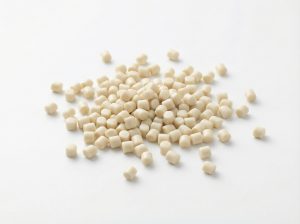
JEKIN Polymer supplies unfilled PEEK in various forms including pellets for injection molding, extruded profiles, and compression-molded shapes.
5.2 Glass-Filled PEEK
Glass-filled PEEK incorporates glass fibers that enhance stiffness, strength, and dimensional stability compared to unfilled material.
The mechanical advantages of glass-filled PEEK enable use in structural applications where metal replacement offers weight savings.
JEKIN Polymer provides technical support to help customers optimize processing conditions for glass-filled PEEK grades.
5.3 Carbon Fiber-Reinforced PEEK
Carbon fiber-reinforced PEEK combines the exceptional properties of PEEK polymer with the performance advantages of carbon fiber reinforcement.
The high modulus of carbon fiber-reinforced PEEK enables use in aerospace structural components where stiffness requirements exceed the capability of glass-filled alternatives.
JEKIN Polymer supplies carbon fiber-reinforced PEEK grades optimized for specific application requirements.
5.4 Wear-Resistant PEEK
Wear-resistant PEEK grades incorporate solid lubricants and reinforcing fibers to achieve exceptional wear performance.
Carbon fiber and graphite-filled PEEK grades provide the best wear performance in dry running conditions.
JEKIN Polymer offers wear-resistant PEEK grades formulated for specific operating conditions.
5.5 PEEK Semi-Finished Products: Rods, Tubes, and Sheets
JEKIN Polymer maintains comprehensive inventory of PEEK semi-finished products in various forms to support rapid delivery and cost-effective manufacturing.
PEEK rods serve as the starting point for machined components, offering excellent machinability and consistent quality.
PEEK tubes provide hollow profiles for applications requiring light weight or internal passageways.
PEEK sheets offer flat stock for fabrication or lamination operations.
-
Processing Methods for PEEK
6.1 Injection Molding
Injection molding represents the most common processing method for PEEK polymer, enabling efficient production of complex parts at high volumes.
PEEK material requires processing temperatures in the range of 360-400 degrees Celsius. Modern injection molding machines with closed-loop temperature control produce parts with excellent dimensional accuracy.
JEKIN Polymer provides processing guidelines for each grade supplied.
6.2 Extrusion
Extrusion processes produce PEEK profiles, tubes, and films for various applications.
PEEK tubes and profiles require controlled cooling to achieve proper crystallinity and dimensional stability.
JEKIN Polymer supplies extruded PEEK products as standard items and can develop custom profiles to specification.
6.3 CNC Machining
CNC machining of PEEK semi-finished products provides the precision and flexibility needed for complex components.
The excellent machinability of PEEK enables tight tolerances and smooth surface finishes.
JEKIN Polymer provides CNC machining services for custom PEEK components.
6.4 3D Printing with PEEK
Additive manufacturing with PEEK represents an emerging technology that enables production of complex geometries previously impossible with traditional methods.
3D printed PEEK parts serve applications where injection molding or machining would be cost-prohibitive for low volumes or highly complex designs.
JEKIN Polymer provides technical support for customers exploring 3D printed PEEK applications.
-
Industry Standards and Certifications
PEEK material is subject to various industry standards and certifications that ensure consistent quality and performance.
Aerospace applications typically require materials that meet AMS (Aerospace Material Specification) standards. PEEK grades designated as aerospace-qualified undergo additional testing.
Medical applications require materials that comply with relevant pharmacopeia standards. USP Class VI certification demonstrates biocompatibility for implantable applications.
JEKIN Polymer supplies medical-grade PEEK with complete documentation packages.
-
Why Choose PEEK Over Other Engineering Plastics?
When evaluating high-performance polymers for demanding applications, PEEK often represents the optimal choice despite its higher initial cost.
The total cost of ownership for PEEK components typically proves lower than alternatives due to extended service life, reduced maintenance, and improved reliability.
The thermal performance envelope of PEEK exceeds that of most engineering plastics, enabling use in applications beyond the capability of alternatives.
Chemical resistance distinguishes PEEK from many alternatives in aggressive environments. PEEK provides inherent resistance across a broad spectrum.
-
Sourcing Quality PEEK Materials from JEKIN Polymer
JEKIN Polymer has established relationships with leading PEEK manufacturers to ensure consistent quality and reliable supply.
Quality management at JEKIN Polymer follows ISO 9001 principles, ensuring consistent product quality and traceability. Each shipment includes Certificate of Conformance documentation.
Inventory management ensures rapid availability of standard PEEK grades and forms. Our warehouse locations provide quick delivery to meet urgent requirements.
Technical support extends beyond initial material selection. JEKIN Polymer engineers assist with processing optimization, failure analysis, and design review.
-
Future Trends in PEEK Applications
The future of PEEK polymer looks bright as new applications emerge and existing uses expand.
Electric vehicle adoption drives demand for PEEK in electrified powertrains where thermal management and electrical isolation requirements favor high-performance polymers.
Medical applications continue to expand as device manufacturers discover the advantages of PEEK for implantable and disposable devices.
Sustainability trends create both challenges and opportunities for PEEK. JEKIN Polymer actively participates in sustainability initiatives throughout the PEEK value chain.
-
Conclusion
PEEK polymer has earned its position as the leading high-performance polymer through decades of proven performance across diverse industries. The exceptional combination of thermal stability, chemical resistance, mechanical strength, and electrical insulation makes PEEK the material of choice for applications where failure is not acceptable.
JEKIN Polymer stands ready to support your PEEK material requirements with comprehensive technical expertise and global supply capabilities. Our commitment to quality and customer success has made us a trusted partner for engineering professionals worldwide.
Contact our technical team to discuss your specific application requirements.
Quality PEEK materials, expert technical support, and reliable supply await you at jekinpolymer.com.