
CNC Machined Plastic Parts
Custom plastic components based on drawings or samples.
Representative visuals only. Final geometry, material grade and requirements are confirmed project by project.
Start with the finished geometry.
These examples show common machined forms, not a fixed catalog. Final part shape, material grade, tolerances, inspection and supply route need to be reviewed against the project requirements.
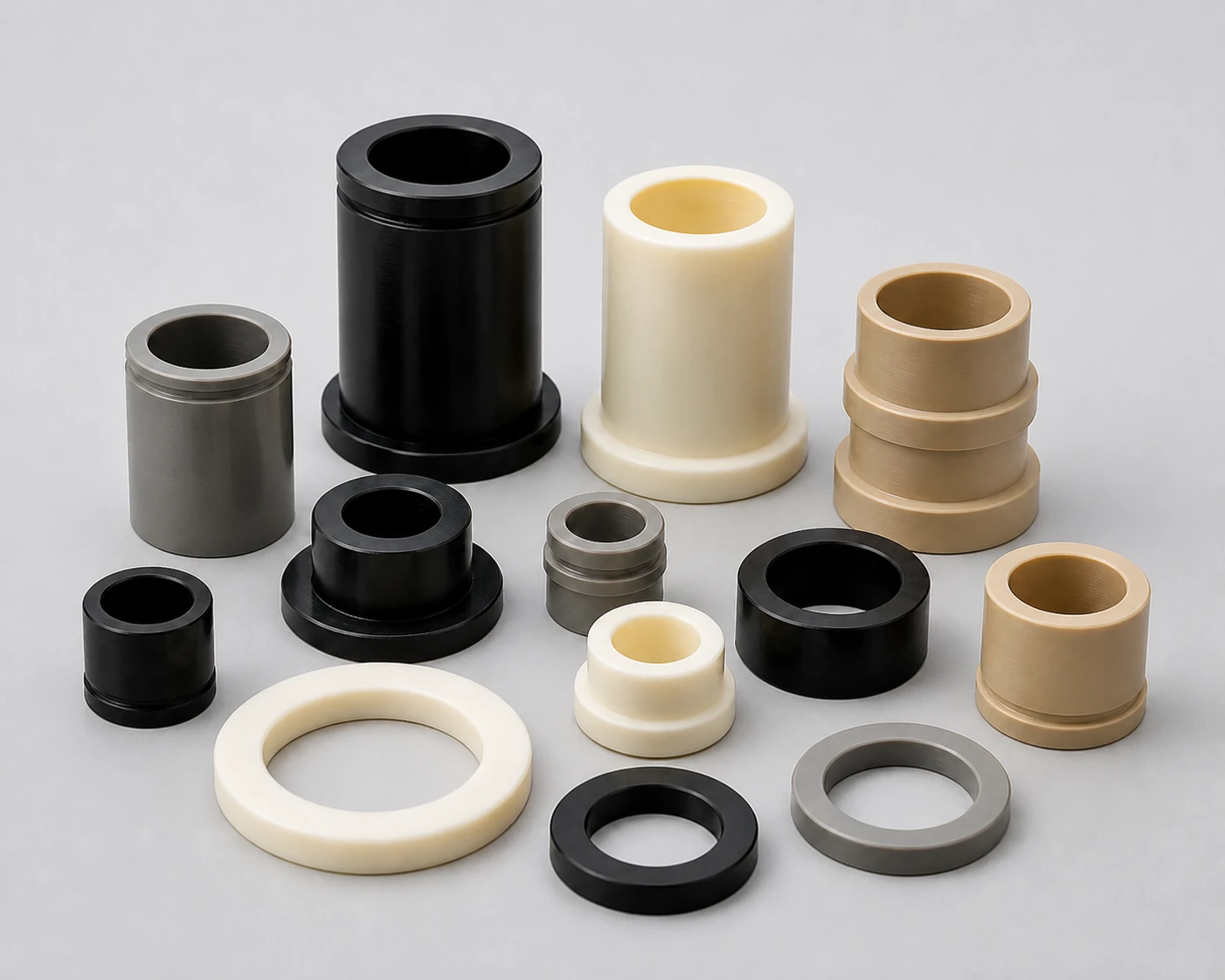
Bushings, sleeves and round components
Use round geometry as the starting point for bushings, sleeves, spacers, collars, rings and similar turned forms.
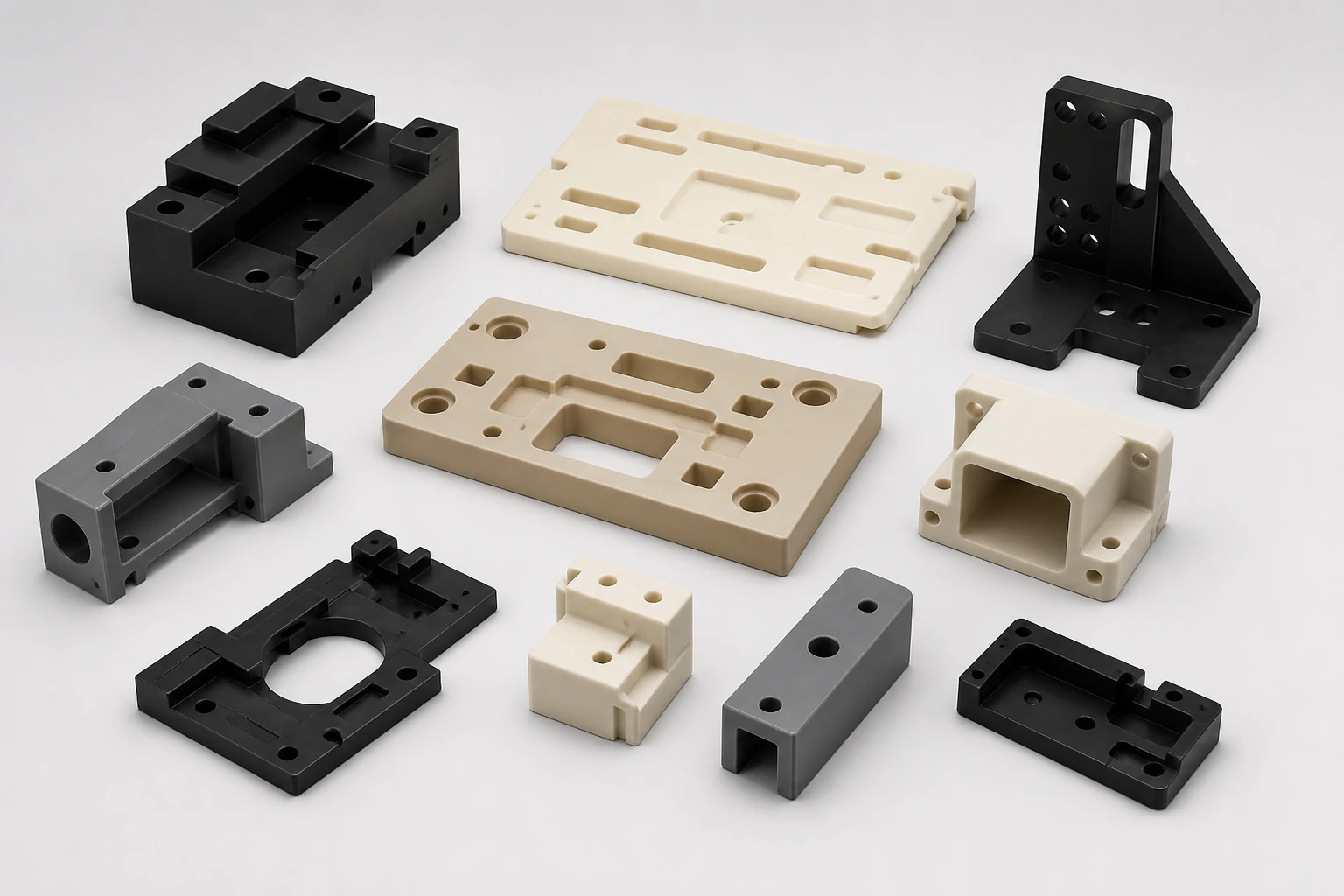
Brackets, plates and support components
Use flat or prismatic geometry for brackets, guide plates, covers, carriers, blocks and other milled forms.
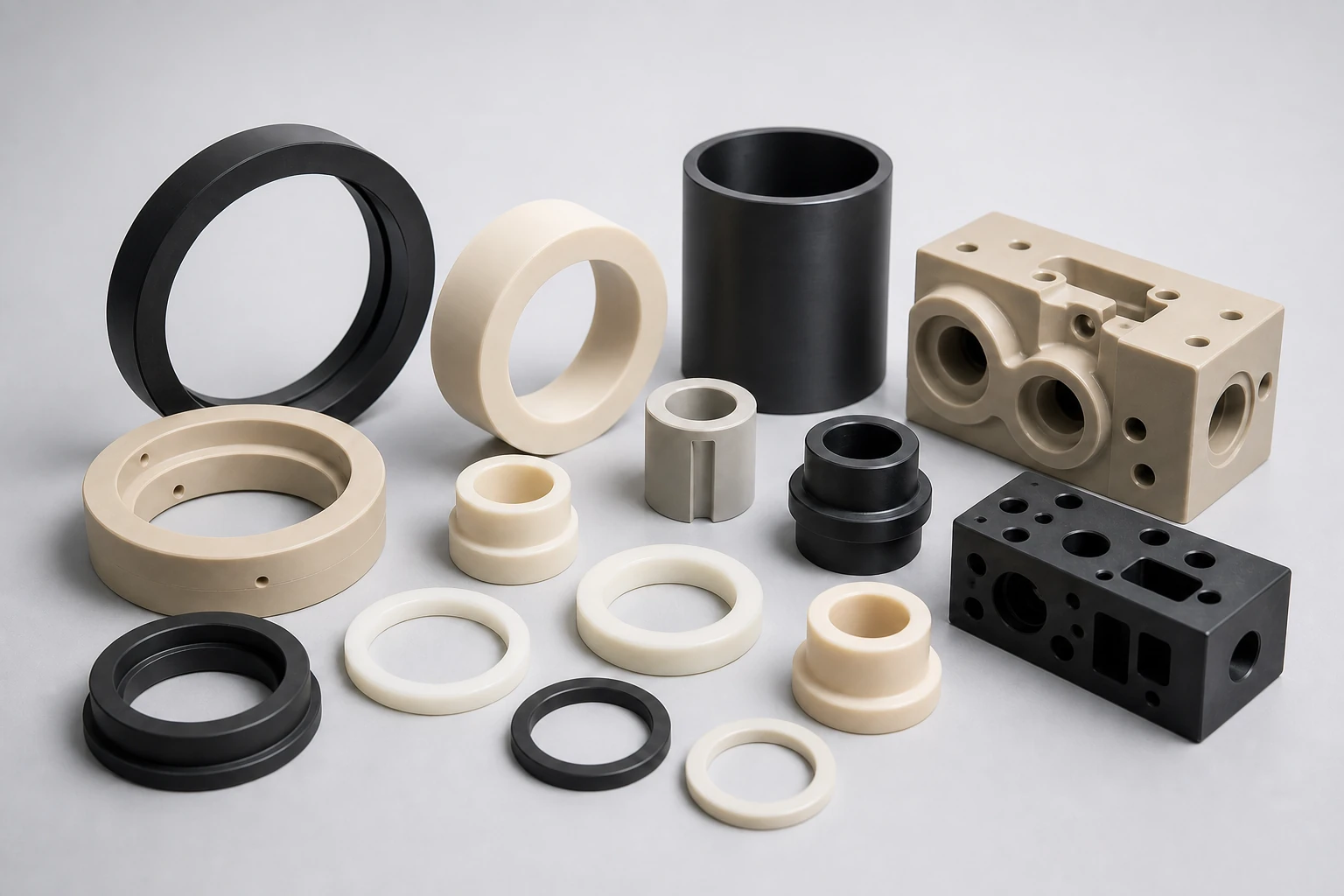
Rings, liners and channel forms
Review fluid-contact rings, liners, wear elements and channel blocks around the medium, load and service conditions.
Representative visuals: the generated images illustrate component forms only. They do not define a standard part, material grade, tolerance or certification.
A clear route for a drawing-based inquiry.
A useful review connects the finished geometry with the material, starting stock and evidence needed for the project. The sequence can begin with a drawing, a sample or an existing material requirement.
Share the drawing or sample.
Provide the available geometry, reference dimensions, sample notes and intended quantity.
Confirm the candidate grade.
State the polymer family, grade, color, filler, approved material or service conditions.
Define machining and inspection.
Review datums, tolerances, machined surfaces, inspection conditions and requested documents.
Confirm the quotation route.
Align quantity, stock form, delivery destination and the information still needed for quotation.
Send the information that makes a part review useful.
A material name alone rarely defines a suitable machined part. These details help separate the material question from the geometry, inspection and availability questions.
Separate the finished part from the starting material.
A drawing-based part inquiry and a semi-finished stock inquiry may start from the same polymer, but they require different information and confirmation steps.
Start with the finished geometry.
Submit a drawing or sample and define the critical features, material route, quantity and inspection needs.
Send a drawingStart with rod, sheet or tube.
Choose the starting form around the geometry, allowance, dimensions, quantity and current stock requirement.
Review stock shapesStart with the service conditions.
Review temperature, load, wear, medium, electrical needs and documentation before fixing the material family.
Open selection guideQuestions before sending a CNC parts inquiry.
Can I start with a sample instead of a complete drawing?
Yes, a sample can help define the part form, but the review still needs available dimensions, material information, quantity and service conditions. Final geometry and inspection requirements should be confirmed before quotation.
What should accompany a drawing?
Include the material or candidate grade, quantity, critical dimensions, tolerances, datums, surface requirements, service conditions and any requested TDS, COA or inspection records.
Can I request both the machined part and the stock material?
State whether you need a finished drawing-based component, a semi-finished rod, sheet or tube, or both routes for review. The required dimensions and confirmation steps are different.
Does the drawing alone determine the material grade?
No. The drawing defines geometry, but temperature, load, wear, medium, electrical needs, quantity and documentation can affect the suitable material route. Confirm the grade for the specific project.
Have a drawing or sample ready?
Send the information you have. The next step is to connect the part geometry with the material, stock form, quantity and inspection requirements.
Need to choose the material or starting form first?
Review semi-finished stock shapes, compare material families or contact JEKIN with the information available.