
Fluoropolymer semi-finished stock

PVDF Rods, Sheets and Tubes for Chemical, High-Purity and Outdoor Service

PVDF stock shapes for corrosion-resistant fluid handling, high-purity systems, electrical insulation and weather-exposed components. Select the exact grade, dimensions and material condition for the service.

  • Strong chemical resistance
  • High-purity options
  • UV-stable fluoropolymer

Selection note: Typical PVDF values vary with grade, crystallinity, processing route and service conditions. Confirm temperature, media, color, purity documentation and dimensions against the applicable TDS.

What is PVDF?

A Semi-Crystalline Fluoropolymer for Chemical and High-Purity Service

PVDF, or polyvinylidene fluoride, is a semi-crystalline fluoropolymer that combines mechanical strength, chemical resistance, electrical insulation and outdoor stability in a machinable stock material.

It is considered for chemical-fluid components, high-purity water systems, wire insulation, weather-exposed parts and selected sensing applications. The exact grade, crystallinity, color and production route can change the result.

Typical values in the applicable PVDF reference include a density of 1.76–1.80 g/cm³, tensile strength of 45–60 MPa and maximum continuous service temperature up to 150°C. Confirm the supplied grade TDS before design release.

01

Chemical resistance

PVDF is considered for many acid, base, halogen and solvent environments; concentration, temperature and exposure time still require a grade-specific review.

02

Low moisture uptake

Low water absorption can support stable electrical and dimensional performance in suitable fluid-handling and outdoor environments.

03

UV and weather stability

The fluorocarbon backbone supports outdoor weatherability, but the color, surface finish and final design life still need validation.

04

Electrical and purity options

Insulating, high-purity and conductive formulations may be reviewed for different systems. Confirm extractables and documentation by exact grade.

Grade-family selection

Confirm the PVDF Formulation Before Comparing Properties

Unfilled, high-purity, conductive and modified PVDF grades address different service priorities. Do not transfer a value from one formulation to another without the applicable TDS.

General-purpose stock

Unfilled PVDF

The baseline option for chemical-resistant, electrically insulating rods, sheets and tubes where the base resin meets the temperature, media and dimensional requirements.

  • Fluid-handling parts and corrosion-resistant supports
  • Electrical insulation and outdoor components
  • Confirm color, crystallinity and stock condition
Clean-service scope

High-Purity PVDF

A purity-focused formulation may be considered for semiconductor, ultrapure-water and laboratory fluid paths. The resin grade and manufacturing controls determine the actual extractables profile.

  • Manifolds, fittings and high-purity tubing
  • Review metal ions, leachables and cleaning conditions
  • Request the exact purity documentation
Electrical-function grade

Conductive or Antistatic PVDF

Conductive carbon-black modifications can change electrical behaviour, stiffness, surface finish and chemical compatibility. They should be selected only when the required resistance range is defined.

  • Static-control components and selected battery equipment
  • Confirm surface or volume resistivity by grade
  • Check filler content and machining behaviour
Modified performance scope

PVDF-HFP, Flexible or UV-Modified Grades

Copolymer, flexible and UV-focused modifications can shift toughness, piezoelectric response, weatherability and processing behaviour. Treat each formulation as a separate material option.

  • Battery binders, films, sensors or exposed components
  • Confirm the intended processing route
  • Request formulation-specific technical documents

PVDF supply forms

Match the Stock Form to the Finished Geometry

PVDF is supplied as rod, sheet / plate and tube stock for machining or fabrication. Confirm grade, color, dimensions, allowance, quantity and current stock status during quotation.
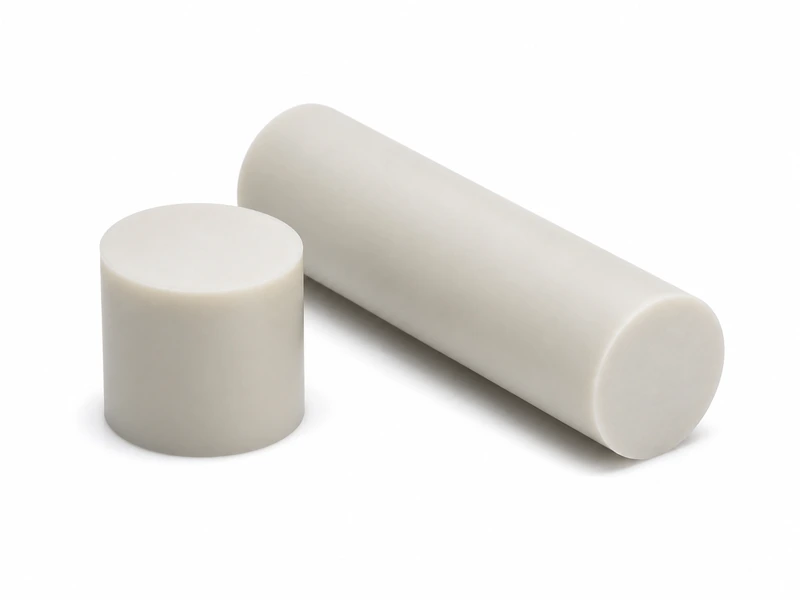
Natural white PVDF rod stock with a short cut section and a long cylindrical rod
Round stock

PVDF Rod

Starting stock for turned bushings, spacers, valve components, sensor supports, fasteners and other round parts exposed to chemical media or outdoor service.
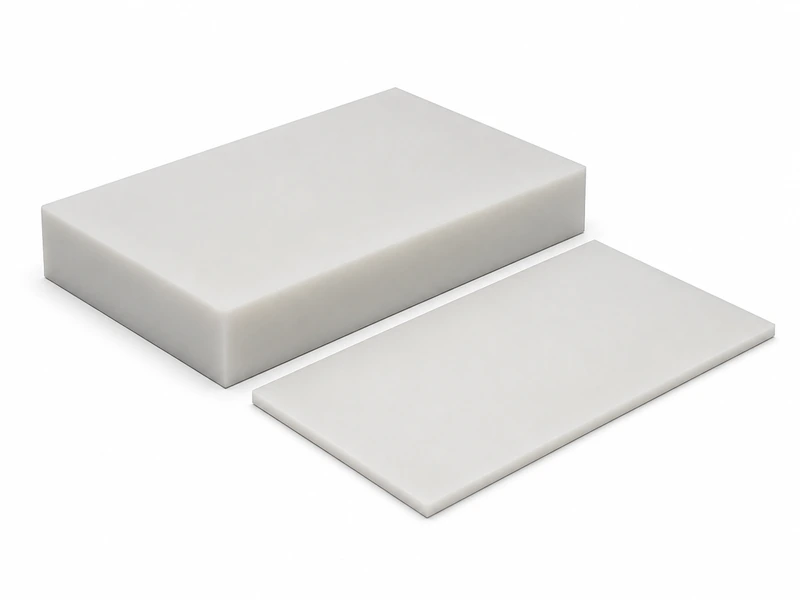
Confirm diameter, length, grade, color, machining allowance, quantity and current stock.
Natural white PVDF sheet and plate stock on a white background
Flat stock

PVDF Sheet and Plate

Flat stock for liners, covers, process fixtures, insulating plates, manifolds and fabricated components where chemical resistance and dimensional control are required.
Confirm thickness, width, length, flatness, grade, color, quantity and current stock.
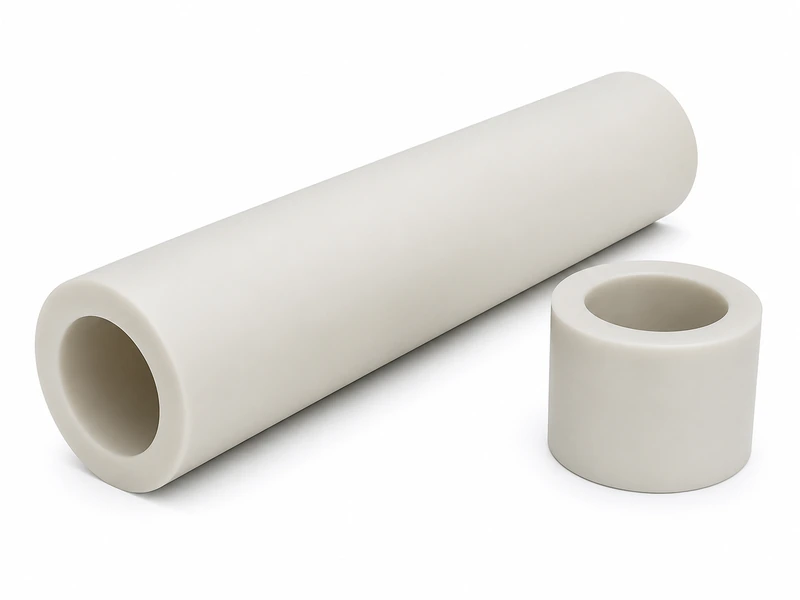
Natural white PVDF hollow tube stock with a cut section showing the inner bore
Hollow stock

PVDF Tube

Hollow stock can reduce material removal for fluid lines, sleeves, liners, rings and other annular parts. Check pressure, vacuum, temperature and media compatibility before use.

Confirm outside diameter, inside diameter, wall, length, grade, color, quantity and current stock.
Drawing-based review

Cut-to-Size and Machining Feasibility

Share the drawing, tolerances, fluid, temperature, pressure, purity requirements and inspection documents. We can then review the appropriate stock form, allowance and supply condition for the requested geometry.

Required input: grade, drawing, tolerance, quantity, service conditions, color, documentation and delivery target.

Technical selection checklist

Verify These Items Against the Exact PVDF Grade TDS

PVDF is often selected for chemical, purity, electrical or outdoor requirements. Confirm the real temperature, pressure, media, purity target and documentation instead of relying on one headline property.

Selection topic What to confirm Why it matters Quotation input
Temperature and pressure Continuous, peak and cycling temperature; internal pressure, vacuum and thermal gradients Temperature, stress and pressure together determine creep, sealing and dimensional margin Temperature profile, pressure / vacuum, exposure duration and safety factor
Chemical exposure Medium, concentration, temperature, cleaning agent, permeation risk and exposure time Compatibility can change with concentration, temperature, stress, color and formulation Full chemical list, concentration, cleaning process and duty cycle
Purity and extractables Metal ions, particles, leachables, packaging, cleaning and traceability requirements High-purity performance belongs to a controlled grade and production route, not to the PVDF name alone Purity target, contact medium, lot documents and destination process
Electrical behaviour Insulation, antistatic or conductive requirement; surface / volume resistivity and dielectric duty Fillers and modifications can change electrical response, stiffness, finish and chemical compatibility Resistance range, voltage, frequency, grounding and test method
Weather and UV exposure Sunlight, humidity, temperature cycling, color retention and expected outdoor service life UV stability depends on grade, color, surface and the complete assembly design Exposure location, design life, color and appearance standard
Dimensions and machining Rod / sheet / tube geometry, allowance, flatness, tolerance and inspection condition Crystallinity, stress relief, wall thickness and machining sequence affect final dimensions Drawing, datum, tolerance, quantity and inspection environment
Documentation scope TDS, COA, traceability, purity statement, electrical report or other requested documents Declarations apply only to the supplied grade, color, form and production lot Destination market, certificate, report and lot information
Reference note: published PVDF values vary by grade, crystallinity, color, stock form, test method, thickness and operating conditions. Use the applicable TDS and finished-part validation before approving a design.

PVDF applications

Chemical, High-Purity, Electrical and Outdoor Use Cases

These are application starting points for PVDF stock, not automatic approvals or certification claims. Confirm the exact formulation, process, temperature, media and documents for each finished component.
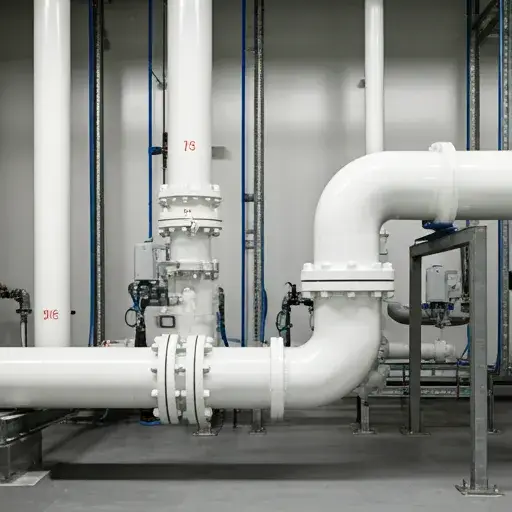
PVDF chemical processing pipes and components

Chemical processing

Liners, pipes, valves, pump components, manifolds and fittings may be considered where chemical resistance and electrical insulation are needed together.

Semiconductor and ultrapure water

High-purity PVDF grades may be reviewed for fluid paths, fittings, manifolds and equipment parts when extractables, particles, cleaning and lot traceability are controlled.

Water treatment and filtration

Fluid-handling components and selected membrane or filtration assemblies can use PVDF when pressure, chemistry, temperature and permeation limits are validated.

Outdoor infrastructure

Weather-exposed covers, supports, cable protection and selected architectural components may benefit from PVDF weatherability. Confirm color retention, design life and assembly interfaces.

Battery and electrical equipment

Insulation, selected binder or static-control applications may require a specific PVDF copolymer or conductive formulation. Verify the electrical, thermal and chemical test requirements.

Piezoelectric and sensing systems

PVDF films and modified formulations can be reviewed for sensors, transducers and energy-harvesting concepts; stock-shape suitability and the required piezoelectric data must be confirmed separately.

PVDF, PTFE, PEEK, PFA or PPSU?

Choose the Material That Matches the Dominant Requirement

No fluoropolymer or engineering polymer is universally better. Compare exact grades at the operating temperature, load, pressure, fluid, geometry, purity target and documentation requirement.

Choose PVDF when

Chemical resistance, high-purity options, low moisture uptake, electrical insulation or outdoor weatherability lead the design.

Consider PTFE when

The dominant requirement is very low friction and broad chemical inertness, while creep, strength and machining behaviour remain acceptable for the design.

Consider PEEK when

Higher temperature capability, mechanical load capacity, wear performance or dimensional retention is needed beyond the selected PVDF grade.

Consider PFA when

Melt-processable fluoropolymer purity and broad chemical resistance are required, with a different temperature, stiffness and cost balance than PVDF.

Consider PPSU when

High impact toughness and repeated hot-water or steam exposure are the primary requirements and the exact grade documentation fits.

Validate

Compare test method, temperature, pressure, stress, chemicals, purity, color, crystallinity, processing history and required documents before approving the stock material.

PVDF stock review Rod · Sheet / Plate · Tube

Share the service conditions and finished geometry so the appropriate PVDF grade, stock form, dimensions and documents can be checked.

  • Grade, color and material condition
  • Dimensions, quantity and allowance
  • Media, temperature, pressure and purity

Quotation workflow

Confirm the Grade, Stock Form and Service Requirement

Share the application conditions

Provide temperature, pressure, vacuum, chemical exposure, purity target, electrical duty, dimensions and expected service life.

Confirm the PVDF grade scope

Identify unfilled, high-purity, conductive or modified PVDF requirements. Request the applicable grade TDS and supporting documentation before selecting the formulation.

Match the stock form and size

Choose rod, sheet / plate or tube based on finished geometry, machining allowance, material utilization, pressure and quantity.

Confirm stock and documents

Confirm dimensions, packaging, current stock, TDS, COA, traceability or purity documents and the expected delivery arrangement before placing the order.

PVDF FAQ

Questions Before Ordering PVDF Stock

The exact grade, stock form, dimensions, service conditions and documentation are as important as the PVDF polymer family.

What is PVDF material?
PVDF, or polyvinylidene fluoride, is a semi-crystalline fluoropolymer used where chemical resistance, electrical insulation, purity or outdoor stability is important. Performance depends on the exact formulation and processing history.
Which PVDF stock shapes are available?
The product-page scope covers PVDF rods, sheets / plates and tubes as starting stock for machining or fabrication. Confirm outside dimensions, length, wall or thickness, color and current stock during quotation.
What temperature can PVDF withstand?
The local PVDF reference lists a maximum continuous service temperature up to 150°C, but this is not a universal design limit. Load, pressure, chemical exposure, section size and exposure time must be checked against the exact grade TDS.
Is PVDF resistant to acids, bases and solvents?
PVDF is considered for many acids, bases, halogens and solvents, but compatibility is concentration- and temperature-dependent. Provide the complete chemical list and cleaning cycle for a grade-specific review.
Can PVDF be used in semiconductor or ultrapure-water systems?
Selected high-purity PVDF grades may be considered for fluid paths, fittings and manifolds. High-purity or low-extractables performance must be confirmed by the exact grade, production route, packaging and supporting documents; the polymer name alone is not a certification.
Are conductive or antistatic PVDF grades available?
Conductive-carbon modifications are a separate formulation scope and can change resistance, stiffness, finish and chemical behaviour. Confirm the required surface or volume resistivity and current supply scope before ordering.
Can PVDF rods, sheets or tubes be machined?
PVDF stock shapes can be used as starting material for drawing-based machining when allowance, tooling, machining sequence, temperature control and final inspection are defined. Send the drawing and service conditions for a stock-size review.
What information is needed for a PVDF quotation?
Provide the required form, dimensions, quantity, color expectation, temperature, pressure, vacuum, chemicals, purity or electrical requirement, delivery target and requested TDS, COA or traceability documents. Current stock and lead time are confirmed during quotation.

Industry Applications

Architectural Coatings (Kynar 500)

The iconic Daxing Airport relies on our PVDF coatings for long-term

color integrity under extreme environmental stress.

Lithium Battery Binders

The invisible backbone of energy storage. Trusted by CATL and Tesla for high-performance electrode adhesion.

Chemical Processing

Industrial pipes and valves with unmatched corrosion resistance for aggressive chemicals.

PVDF

Semiconductor & UPW

Membranes and ultrapure water systems requiring zero leachables and high sterilization resistance.


Piezoelectric Sensors

Smart skin and ultrasonic transducers utilizing the exceptional ferroelectric properties of PVDF films.

More Polymer Material…

LOOKING FOR MORE?

Explore material possibilities for your engineering projects based on your specific operating temperatures.

Ultra-High

Unmatched thermal and chemical durability in the most demanding conditions.

Advanced

Superior mechanical properties optimized for heavy industrial engineering.

Fluoropolymer

The absolute pinnacle of thermal and chemical resistance for critical environments.

Standard

Versatile performance and high economy for standard industrial applications.

Discuss Your Polymer Solution Needs

Ready for your next project? Complete the form to consult with our technical team. 

Official logo of Jekin Polymer - A leading provider of high-performance engineering plastics and polymer solutions

WE ARE HERE TO HELP YOU

Discuss Your Polymer Solution Needs

Are you looking for top-quality polymer solutions tailored to your needs?

Reach out to us.

Form / Shape
Please include dimensions, quantity, drawing availability, operating temperature, chemical exposure or application details.