
Food processing material solutions
High-Performance Polymers for Food Processing Equipment
Food-processing equipment may expose plastic components to repeated cleaning, temperature cycling, product media, moisture and wear. Jekin supplies semi-finished PEEK, PPSU, PTFE and PVDF stock shapes for grade-by-grade review against the required food-contact documentation, cleaning protocol and operating conditions.
Clear supply scope: Jekin supplies semi-finished engineering plastic materials. FDA/EU compliance claims apply to the material grade as supplied. Final component validation for its intended food-contact use remains the responsibility of the buyer or qualified machining partner.
Compliance starts with the regulatory profile
Select the material around food safety, cleaning and durability.
A food-contact component is defined by more than its geometry. Regulatory standards, cleaning chemicals, temperature cycling, media exposure and contamination risk must be considered together before the polymer, grade and stock form are selected.
Regulatory compliance
Confirm FDA 21 CFR, EU 1935/2004, 3-A Sanitary Standards or NSF requirements that apply to the finished food-contact component.
Chemical cleaning resistance
Review CIP and SIP protocols: cleaning agents, concentration, temperature, contact time and frequency of exposure to aggressive sanitizers.
Temperature extremes
Define the minimum and maximum operating temperatures, including frozen service, hot-water or steam exposure, cycle duration and thermal-shock conditions.
Contamination prevention
Evaluate particle shedding, extractables, surface porosity, bacterial adhesion risk and the material’s ability to maintain a hygienic surface over its service life.
Where stock shapes enter food processing lines
Machinable materials for hygienic, wear-resistant and chemically exposed components.
These examples are starting points for material discussion, not automatic approvals. Final suitability depends on the selected food-contact grade, component design, cleaning protocol and customer validation under actual operating conditions.
Scrapers, blades & doctor blades
Wear-resistant stock for product-contact edges that must maintain a clean profile through repeated cleaning cycles and continuous abrasion.
Often considered: PEEKSeals, gaskets & O-rings
Chemically inert sealing materials for hygienic joints, flanges and connections exposed to CIP chemicals, steam and product media.
Often considered: PTFEManifolds, connectors & fittings
Candidate stock for fluid distribution, sampling and transfer components where repeated steam exposure and chemical resistance must be evaluated.
Often considered: PPSUPump housings, impellers & valve bodies
Corrosion-resistant stock for fluid-handling equipment exposed to acidic cleaning agents, process chemicals and high-purity water.
Often considered: PVDFBushings, bearings & wear rings
Low-friction, non-contaminating wear components for rotating and sliding assemblies operating under washdown and wet conditions.
Often considered: PEEK / PTFESight glasses & level indicators
High-clarity, autoclavable material for viewing windows and fluid-level monitoring on tanks, vessels and process lines.
Often considered: PPSUMaterial guide
Compare food-contact engineering plastics by the complete duty cycle.
Shortlist PEEK, PPSU, PTFE and PVDF by regulatory compliance, cleaning resistance, temperature range, wear and contamination risk.
A candidate where temperature, steam exposure, chemical cleaning and wear must be considered together. Food-contact statements and performance data must be confirmed for the exact grade.
Often reviewed for repeated hot-water or steam exposure and for applications where transparency may support visual inspection. Confirm the exact grade, cycle conditions and documentation.
Often reviewed for chemical exposure, low-friction interfaces and applications where reduced surface adhesion may be useful. Confirm media, temperature, load and food-contact documentation.
Often reviewed for chemically exposed fluid-handling components. Compatibility with sanitizers, acids and process media must be checked at the actual concentration and temperature.
Semi-finished product forms
Choose the stock shape around the finished geometry.
Select rod, sheet or tube according to machining allowance, wall thickness and material utilization. Polymer, food-contact grade, dimensions and availability should be confirmed at quotation.
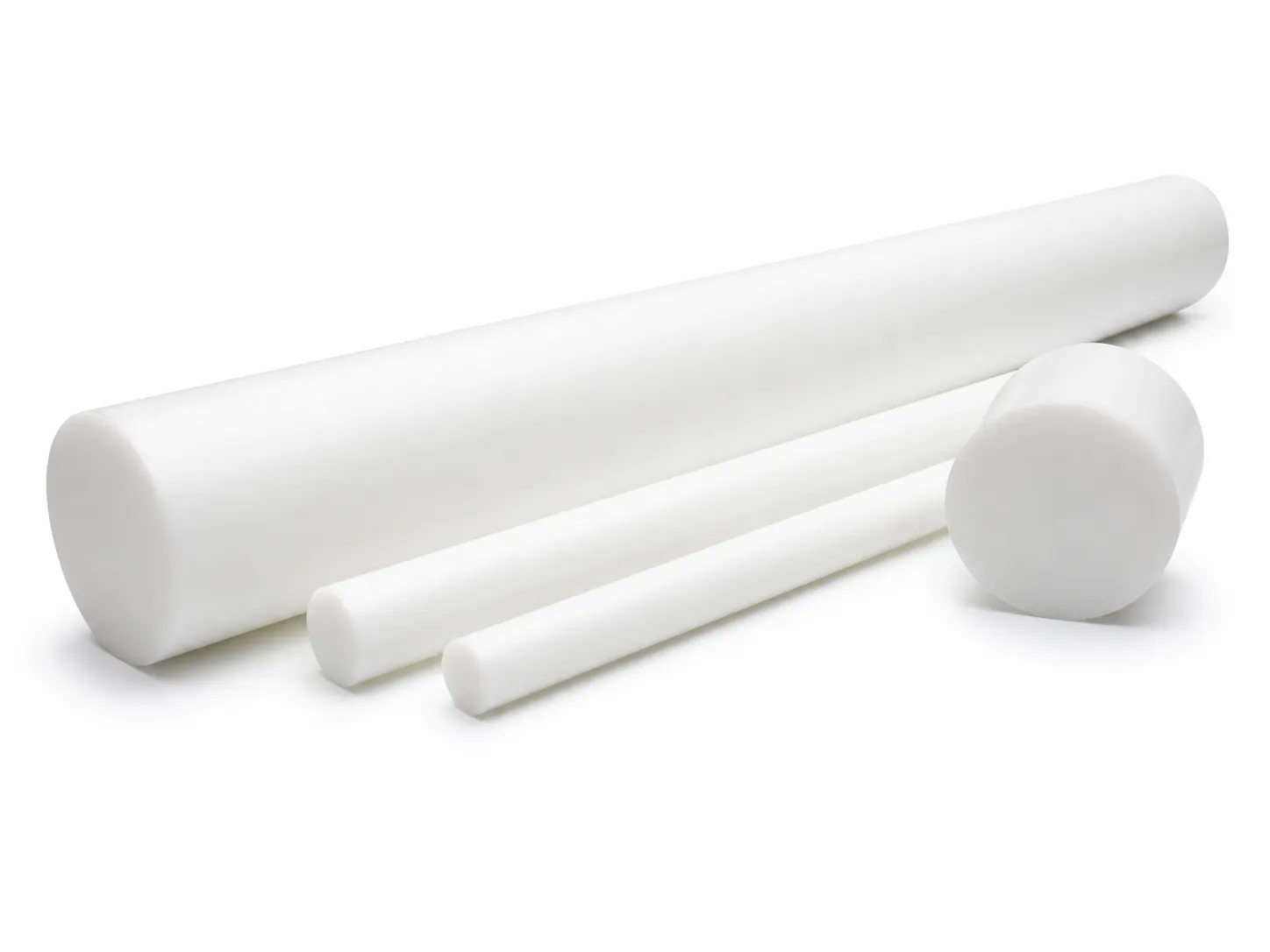
Rods
Starting stock for bushings, bearings, wear rings, rollers, pins and other round machined food-contact components.
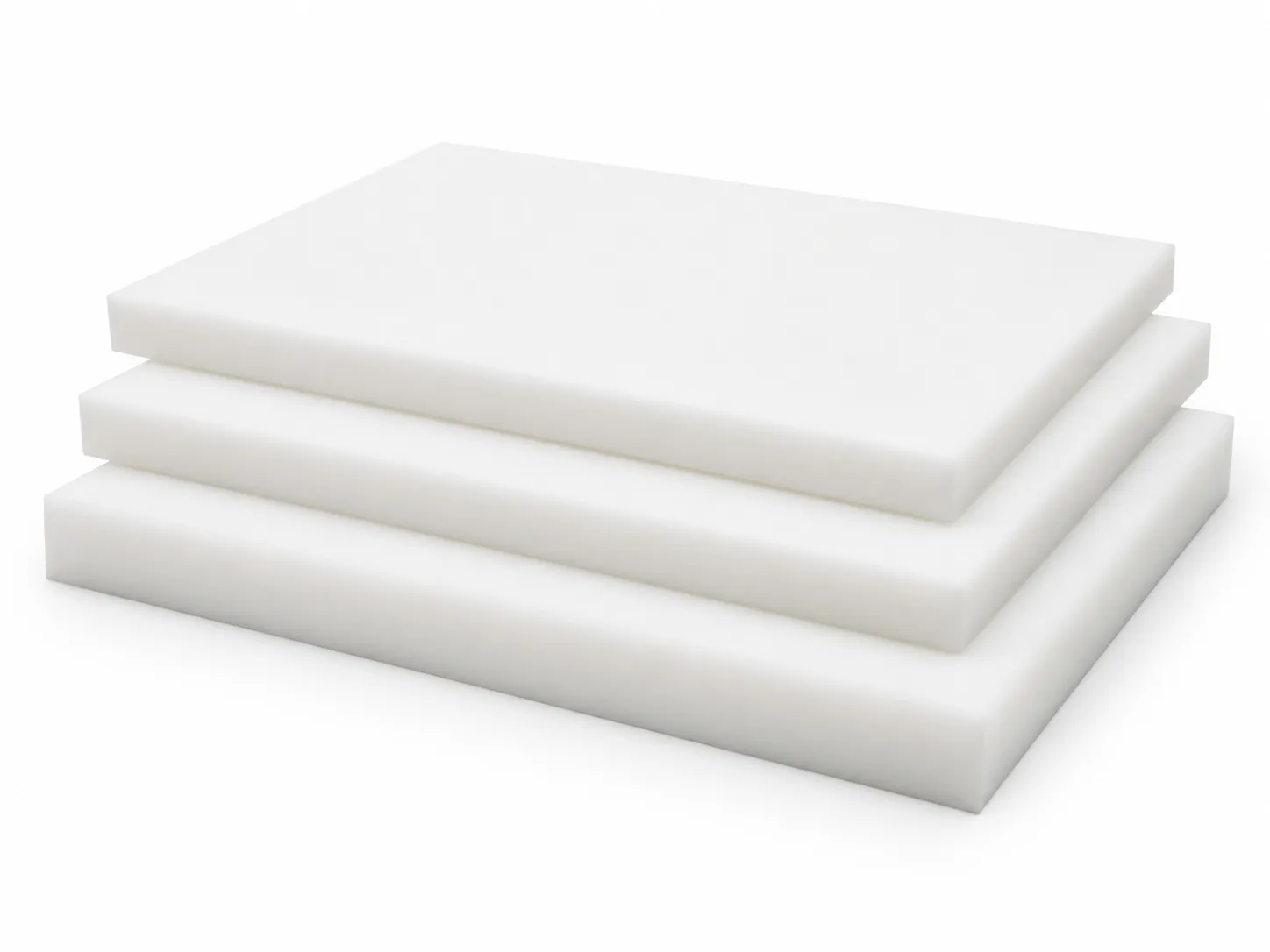
Sheets
Efficient stock for scrapers, blades, seals, gaskets, wear pads and flat or profiled hygienic equipment components.
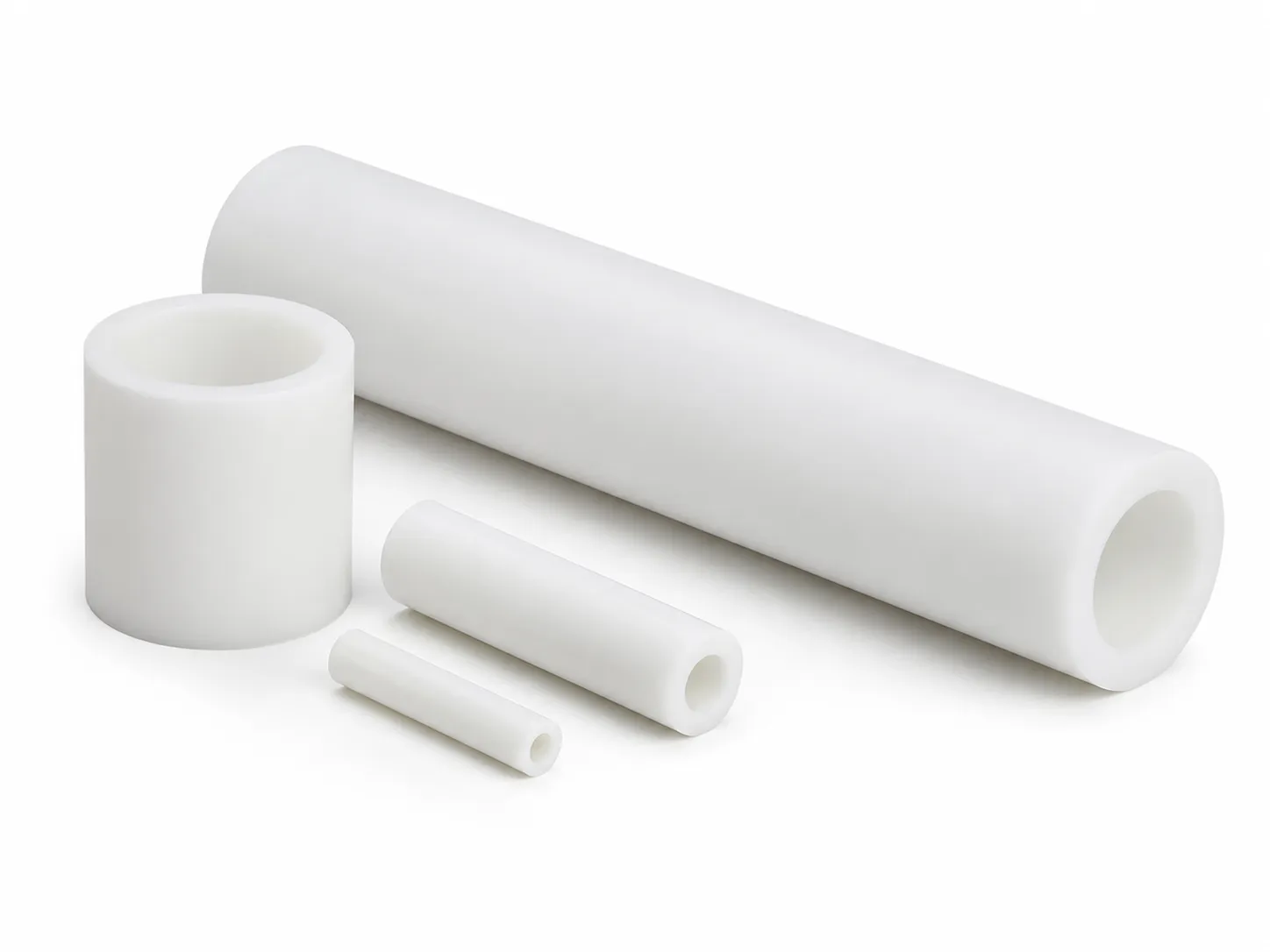
Tubes
Hollow stock can reduce material removal for sleeves, large bushings, rings, manifolds and tubular component geometries.
A supply model built around your validation
From food-safety requirements to a documented stock-shape selection.
Regulatory standards and cleaning protocols guide the material, grade and stock-form discussion—even when Jekin supplies the semi-finished material rather than the finished component.
Important: Final component geometry, machining practice, cleaning validation and food-contact compliance remain part of the buyer’s or qualified machining partner’s manufacturing process.
Define the food-contact conditions
Share temperature range, cleaning chemicals and concentration, food type, regulatory standards and expected service life.
Select material and exact grade
Shortlist candidate polymers, then confirm the food-contact statements, composition, modification and technical data for the exact supplied grade.
Confirm stock form and compliance documents
Choose rod, sheet or tube, then request the dimensions, quantity and regulatory documentation needed for procurement.
Machine and validate the component
Your qualified partner produces the final geometry and validates the finished component against the intended food-contact and operating requirements.
Application checklist
Six inputs to define before ordering food-contact stock.
Clear operating and regulatory data reduces the risk of selecting a polymer or grade that does not match the finished component’s food-safety requirements.
01 — Regulatory requirements
FDA 21 CFR, EU 1935/2004, 3-A Sanitary, NSF or other applicable food safety standards for the finished component.
02 — Cleaning protocol
CIP/SIP parameters: cleaning agents, concentration, temperature, contact time, frequency and any sanitizer compatibility requirements.
03 — Temperature range
Minimum and maximum service temperatures, sterilization excursions, thermal shock conditions and cycle duration.
04 — Media contact
Food type, pH range, fat content, abrasive ingredients, process additives and any mixed-media exposure conditions.
05 — Wear and service life
Acceptable wear rate, replacement intervals, contamination risk from component degradation and surface finish requirements.
06 — Documentation and traceability
FDA/EU compliance statements, material certifications, batch traceability, change control and application-specific evidence.
Information and documentation
Confirm the material and compliance information before purchase.
Document availability can vary by polymer, grade and batch. State the required regulatory documents in the inquiry so they can be reviewed with the material and quotation.
- FDA/EU compliance statement, where available
- Technical data sheet, where available
- Certificate of analysis or batch document, where available
- Material and food-contact grade identification
- Dimensions, tolerances and stock-form details
- Traceability requirements stated before order
Frequently asked questions
Food processing engineering plastic stock shapes FAQ
Selection starts with the cleaning protocol and regulatory profile, not the application name alone.
Does Jekin supply FDA-compliant materials?
Jekin can supply materials with FDA/EU food-contact compliance statements where available for the specified grade. Confirm the exact regulatory requirement with each inquiry—compliance claims apply to the material as supplied, not the finished component.
Which polymers should be evaluated for higher-temperature food processing?
PEEK and PPSU can be considered when temperature, repeated steam exposure or cleaning conditions are important. The choice depends on the exact temperature cycle, chemicals, load, wear requirements and documentation available for the specified grade.
How do I choose between PEEK and PPSU for food contact?
Compare the temperature cycle, cleaning chemicals, mechanical load, wear, transparency needs and cost. PEEK and PPSU have different performance profiles, so the decision should use exact grade data and application validation rather than the polymer name alone.
When should PTFE or PVDF be considered?
PTFE is often reviewed for seals, gaskets and low-friction interfaces; PVDF is often reviewed for chemically exposed fluid-handling parts. Confirm the actual chemical, concentration, temperature, load and required food-contact documents.
Are your materials suitable for CIP and SIP environments?
PEEK and PPSU are the grades most often reviewed for repeated CIP/SIP exposure. PTFE and PVDF can also be considered depending on chemical agents, cycle temperature and mechanical requirements. Grade selection and customer validation are always required.
What documentation is needed for food-grade validation?
State the required regulatory standards (FDA, EU, 3-A, NSF), compliance statements, batch certificates and traceability documents in the inquiry. Provide your cleaning protocol, temperature range and food type so the material grade can be reviewed against your specific application.
Start with the cleaning protocol
Source documented stock material for your food processing component.
Tell us the polymer, food-contact grade, shape, size and quantity—or share the temperature range, cleaning chemicals, food type and regulatory requirements if material selection is still open.