
Building & construction material solutions
High-Performance Polymers for Modern Architectural Design
Modern architecture demands materials that survive the elements for decades. Our high-performance polymers offer superior UV resistance and anti-corrosion properties compared to traditional metals and composites. By providing high-strength, self-lubricating solutions for glass facades, structural fasteners and heavy-duty hinges, Jekin Polymer reduces long-term maintenance costs and enables more ambitious, lightweight architectural designs.
Clear supply scope: Jekin supplies semi-finished engineering plastic stock shapes. Final component design, machining, structural validation and building-code compliance remain the responsibility of the buyer or qualified manufacturing partner.
Performance starts with outdoor durability
Select the material around weather, load, movement and fire safety.
A building component faces decades of UV radiation, temperature swings, moisture, urban pollutants and mechanical cycling. The polymer, grade and stock form must be chosen against the full service-life profile, not just the static design load.
UV and weather resistance
Evaluate long-term outdoor exposure: UV degradation, colour shift, surface crazing and property retention across seasonal temperature and humidity cycles.
Corrosion and chemical exposure
Review urban pollutants, coastal salt spray, acid rain, cleaning chemicals and galvanic corrosion risk where polymers replace or interface with metal components.
Structural and dynamic loading
Define static dead loads, live loads from occupancy and wind, plus cyclic movement from thermal expansion, vibration and seismic requirements.
Fire performance and building codes
Confirm flame-spread classification, smoke density, toxicity and any jurisdiction-specific building-code requirements that apply to the finished component.
Where stock shapes enter building systems
Machinable materials for facades, structural connections and moving architectural elements.
These examples are starting points for material discussion, not automatic approvals. Final suitability depends on the selected grade, component design, building-code requirements and project-specific validation.
Glass facade connectors, brackets & structural standoffs
High-strength, UV-stable stock for point-fixed glazing hardware, curtain-wall connections and thermally isolating structural supports.
Often considered: PEEKHeavy-duty hinges, pivot doors & sliding mechanisms
Self-lubricating, dimensionally stable material for architectural door hardware, pivot bearings and large-format sliding systems requiring low maintenance.
Often considered: POMWeather-exposed fasteners, cladding clips & expansion anchors
Corrosion-free mechanical fixing stock for rainscreen cladding, facade panels and exterior attachment systems exposed to the full weather envelope.
Often considered: PVDF / PAExpansion joint bearings, slide plates & movement joints
Low-friction, high-wear stock for structural movement joints, bridge bearing slides and thermal expansion interfaces in large-scale building structures.
Often considered: UHMWPE / PTFEWindow system bushings, rollers & guide tracks
Quiet, maintenance-free wear components for commercial and residential fenestration systems where smooth operation and long service life are required.
Often considered: POM / PAStructural spacers, insulators & vibration dampers
Electrically and thermally isolating stock for steel-to-steel connections, acoustic isolation pads and vibration-control elements in building services.
Often considered: PEEK / PAMaterial guide
Compare engineering plastics for building and construction applications.
Shortlist PEEK, POM, PVDF, PA and UHMWPE by weatherability, mechanical strength, wear, fire performance and dimensional stability over the building lifecycle.
The high-end choice where fire safety, UV stability, mechanical strength and chemical resistance must work together in critical structural and facade applications.
Outstanding dimensional stability, low friction and good mechanical balance for precision moving parts. Self-lubricating properties eliminate the need for external lubrication in architectural hardware.
The reference polymer for architectural weatherability. Exceptional UV resistance, chemical inertness and colour retention make it the standard for long-term outdoor exposure without protective coatings.
Tough, impact-resistant and wear-capable. A cost-effective choice for structural fasteners, spacers and expansion-joint covers where balanced mechanical performance is required.
Exceptional abrasion resistance and the lowest friction coefficient among engineering polymers. The standard choice for structural sliding bearings and movement joints in heavy civil and building applications.
Semi-finished product forms
Choose the stock shape around the finished geometry.
Select rod, sheet or tube according to machining allowance, wall thickness and material utilization. Polymer, grade, dimensions and availability should be confirmed at quotation.
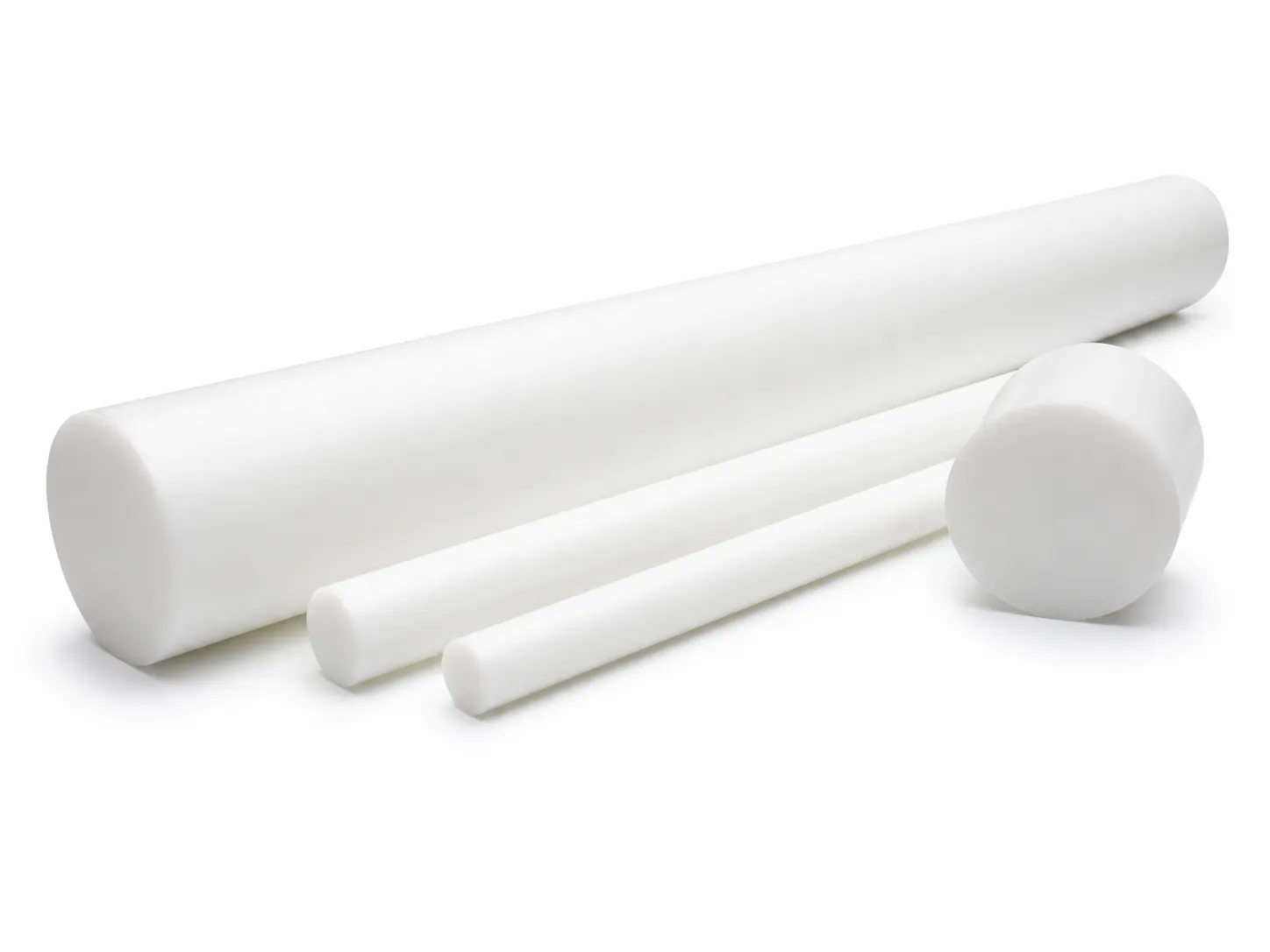
Rods
Starting stock for bushings, pivot pins, bearings, standoffs, anchors and other round machined architectural components.
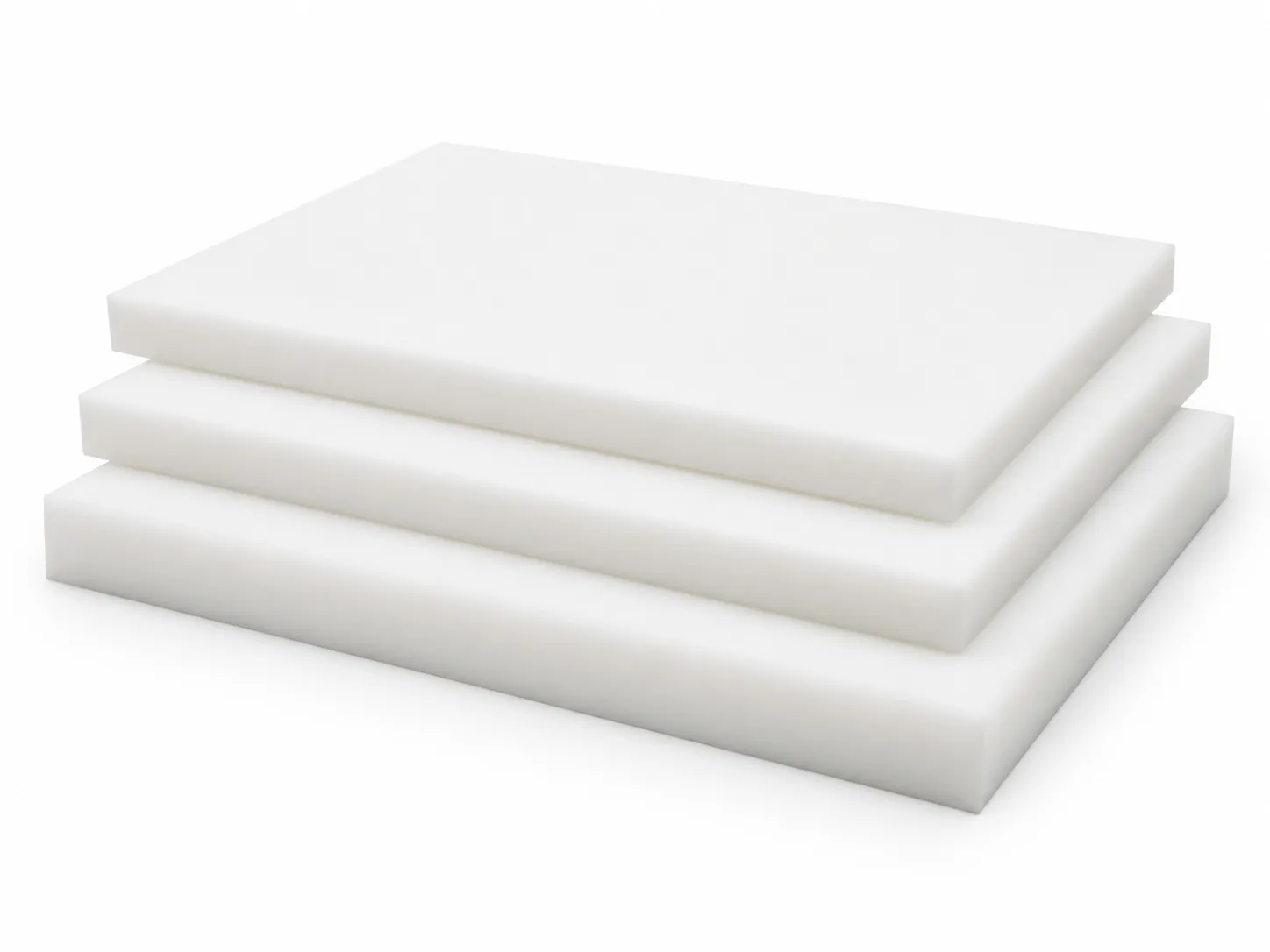
Sheets
Efficient stock for brackets, slide plates, expansion joint pads, spacers, insulators and flat structural architectural parts.
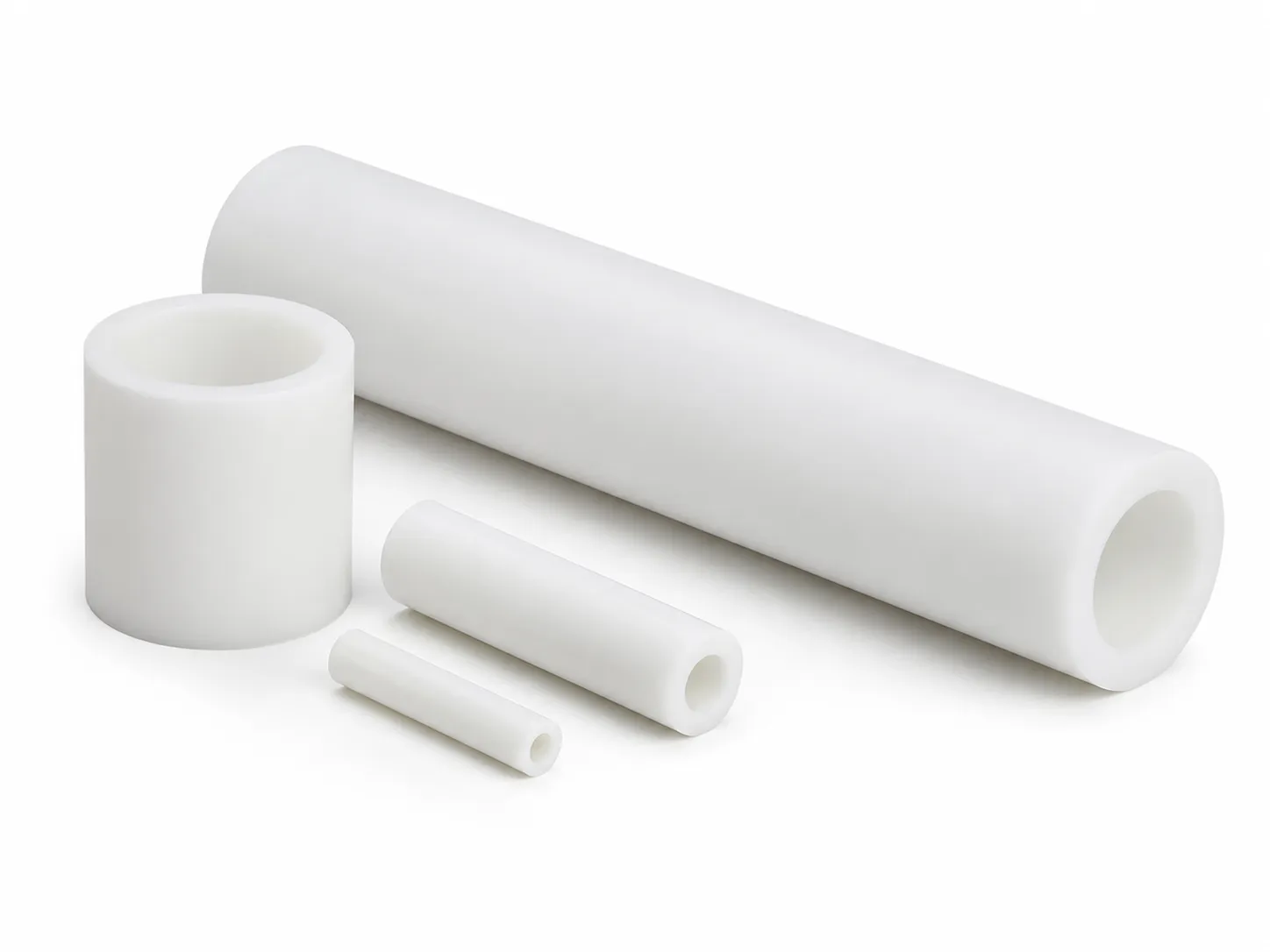
Tubes
Hollow stock can reduce material removal for sleeves, bushings, spacers, rollers and tubular architectural hardware geometries.
A supply model built around your project specification
From architectural requirement to a validated stock shape.
Project specifications, structural calculations and building-code requirements guide the material, grade and stock-form discussion - even when Jekin supplies the semi-finished material rather than the finished component.
Important: Final component geometry, machining practice, structural validation and building-code compliance remain part of the buyer's or qualified manufacturing partner's process.
Define the service environment and code requirements
Share exposure conditions (UV, temperature, moisture, pollutants), structural loads, movement requirements, fire classification and applicable building codes.
Select material and grade
Shortlist the polymer, then confirm whether an unfilled, UV-stabilised, glass-filled or wear-resistant grade is appropriate for the architectural application.
Confirm stock form and documentation
Choose rod, sheet or tube, then request the dimensions, quantity and technical or certification documents needed for project approval.
Machine and validate the component
Your qualified partner produces the final geometry and verifies performance under the specified building service conditions.
Architectural specification checklist
Six inputs to define before ordering building-component stock.
Clear environmental and structural data reduces the risk of selecting a polymer or stock form that does not match the finished component's service-life requirements.
01 - Weather and UV exposure
Outdoor vs. indoor, direct sunlight, geographic climate zone, temperature extremes, humidity range and expected decades of service.
02 - Structural loading
Dead loads, live loads, wind loads, seismic requirements, thermal expansion forces and any dynamic or cyclic loading conditions.
03 - Movement and wear
Sliding or rotation cycles per year, speed, mating surface material, lubrication regime and acceptable wear over the design life.
04 - Fire performance
Flame-spread index, smoke-developed index, toxicity classification and any jurisdiction-specific building-code fire requirements.
05 - Chemical and pollutant exposure
Urban pollutants, coastal salt, acid rain, cleaning agents, de-icing salts and any industrial or environmental chemical exposure.
06 - Documentation and certification
Material data sheets, weatherability test data, fire-performance certificates, batch traceability and project-specific compliance evidence.
Information and documentation
Confirm the material and performance information before purchase.
Document availability can vary by polymer, grade and batch. State the required technical documents in the inquiry so they can be reviewed with the material and quotation.
- Technical data sheet, where available
- UV weatherability and ageing data, where available
- Fire-performance classification, where available
- Certificate of analysis or batch document, where available
- Material, grade and UV-stabilisation details
- Dimensions, tolerances and stock-form details
Frequently asked questions
Building and construction engineering plastic stock shapes FAQ
Selection starts with the outdoor exposure profile and service life, not the component name alone.
Which polymers are suitable for long-term outdoor exposure?
PVDF is the architectural reference for weatherability with decades of proven outdoor performance. PEEK also offers excellent UV and weather resistance for higher-temperature structural applications. UV-stabilised grades of PA and POM can be reviewed for less demanding outdoor conditions. The exact grade, exposure severity and design life must be confirmed.
Can engineering plastics replace metal in structural connections?
PEEK is the polymer most often reviewed for structural load-bearing connections where fire performance, strength and durability are all required. The component design, load calculations and building-code approval remain with the project engineer. PEEK is an alternative to metal in specific conditions, not a universal substitute.
What materials are best for self-lubricating architectural hardware?
POM is widely considered for hinges, sliding mechanisms and window systems where its inherent lubricity eliminates the need for external grease. UHMWPE is the reference for heavy-duty sliding bearings in expansion joints and bridge applications where extremely low friction and high wear resistance are required.
How do engineering plastics perform in fire-rated applications?
PEEK offers inherent flame retardance (V-0 at thin sections) with low smoke and toxic gas emissions. It is the polymer most often reviewed where fire performance is a key specification requirement. Always confirm the specific fire classification, thickness and building-code acceptance for the finished component.
What is the advantage of polymer fasteners over stainless steel?
Engineering plastics eliminate galvanic corrosion, reduce weight, provide thermal and electrical insulation, and can simplify installation. PVDF and PEEK fasteners are reviewed for aggressive outdoor and chemical environments. The structural capacity, however, differs from metal; the connection design must account for the polymer's mechanical properties.
What information is needed for a building-component material quote?
Provide the application type, exposure conditions (indoor/outdoor, climate), structural loads, fire requirements if applicable, stock form, dimensions, quantity and required documentation. A drawing or specification helps align the material grade to the architectural detail.
Start with the exposure profile
Source durable stock material for your architectural component.
Tell us the polymer, grade, shape, size and quantity - or share the exposure conditions, structural requirements and applicable building codes if material selection is still open.