
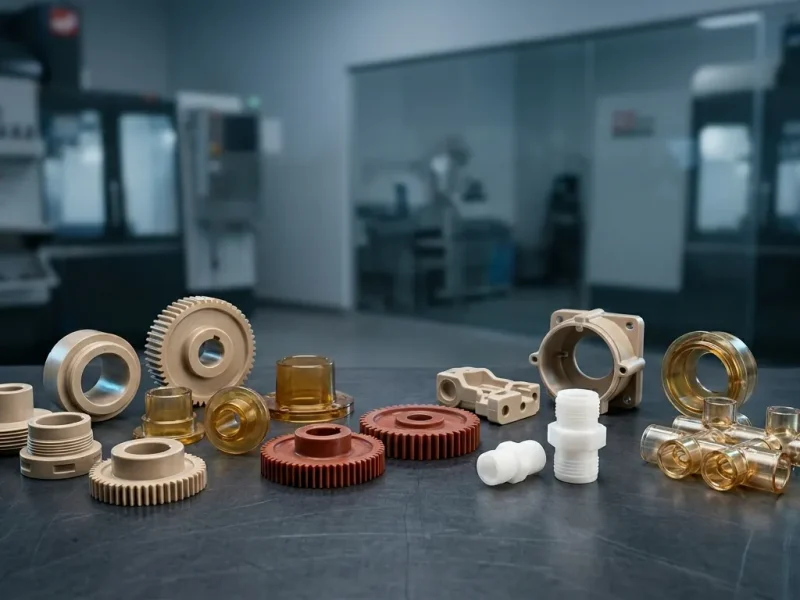
A practical step-by-step framework for choosing the right material
Introduction
With dozens of engineering plastics available, selecting the right one can be overwhelming. This guide provides a systematic framework to narrow your options based on your application’s key requirements.
Step 1: Define Your Operating Temperature
Temperature is the first filter — it immediately eliminates materials that cannot survive your application.
| Temperature Range | Candidate Materials |
|---|---|
| Up to 100°C | HDPE, PP, PA (Nylon), POM, ABS, PC |
| 100–160°C | PSU, PET-P, PPS |
| 160–200°C | PEI, PPSU, PVDF |
| 200–260°C | PEEK |
| 260–300°C+ | PAI, PTFE, PI |
Step 2: Identify Your Chemical Environment
Different materials excel in different chemical environments:
| Chemical Exposure | Top Choices |
|---|---|
| Acids (dilute) | PVDF, PEI, PEEK |
| Acids (concentrated) | PTFE, PFA, PVDF |
| Bases / Alkalis | PPSU, PTFE |
| Hydrocarbons / Oils | PEEK, PAI, PTFE |
| Organic Solvents | PTFE, PEEK |
| Hot Water / Steam | PEI, PPSU, PEEK |
Step 3: Determine Mechanical Requirements
Consider load type, duration, and operating environment:
- Static load: PEEK, PPSU — excellent creep resistance
- Dynamic/wear: PAI (best), POM, PEEK with lubricants
- Impact: PPSU (exceptionally tough), PC, PA
- Precision/dimensional stability: PEI, PEEK, PPSU
Step 4: Check Regulatory Requirements
| Regulation | Materials That Comply |
|---|---|
| FDA food contact | PEEK, PEI, PPSU, PVDF, PTFE |
| ISO 10993 / USP Class VI (medical) | PEEK (Medical grade) |
| UL94 V-0 (flame) | PEEK, PEI, PAI, PPSU, PVDF |
| FAR 25.853 (aerospace) | PEEK, PEI, PPSU |
| NACE (oil & gas) | PEEK, PAI |
Step 5: Consider Cost vs Performance
Material cost hierarchy (general guide):
Standard (HDPE, PP, PA) < Advanced (POM, PSU, PET-P) < PEI < PEEK < PAI ~ PTFE
However, total cost of ownership (TCO) often favors higher-performing materials that last longer, reduce maintenance, and prevent field failures.
Quick Reference: Match Your Application
| Application | Recommended Material |
|---|---|
| Semiconductor wafer handling | PEEK, PAI |
| Medical implantable devices | PEEK (medical grade) |
| Chemical tank / piping | PVDF, PTFE |
| Aerospace interior parts | PEI, PEEK |
| High-temperature bearings | PAI, PEEK PVX |
| Food processing equipment | PPSU, PEI, PEEK |
| Oil & gas downhole seals | PEEK, PAI |
| General precision machining | POM, PA (economical) |
Frequently Asked Questions
Which engineering plastic is best for high-temperature applications?
PAI (275°C) and PEEK (260°C) offer the highest continuous service temperatures among melt-processable thermoplastics. PTFE also offers 260°C but with lower mechanical strength.
What is the most cost-effective high-temperature plastic?
PEI (Ultem) offers the best value in the 170°C range. For applications below 200°C, PEI provides PEEK-like properties at approximately half the cost.
How do I choose between PEEK and PAI?
Choose PEEK for superior chemical resistance and lower moisture absorption. Choose PAI for higher strength (30–60% stronger) and superior wear resistance at temperatures above 250°C.
JEKIN Polymer — Not sure which material fits your application? Our engineers can help →