
Automotive engineering material solutions
Engineering Plastics for Automotive Applications
Rods, sheets, tubes and drawing-based plastic components for vehicle electrical systems, powertrain assemblies, fluid handling, thermal management and production equipment.
Automotive material solutions
Select the Material Around the Real Vehicle Environment
Automotive plastic components may face heat, vibration, fuels, lubricants, coolants, electrical loads, friction and repeated mechanical stress. The correct polymer depends on the combined service conditions rather than a single property.
Jekin supplies engineering plastics including PEEK, PPS, PEI, POM, PA and PTFE in semi-finished stock shapes. Drawing-based machining requirements can also be reviewed for suitable projects.
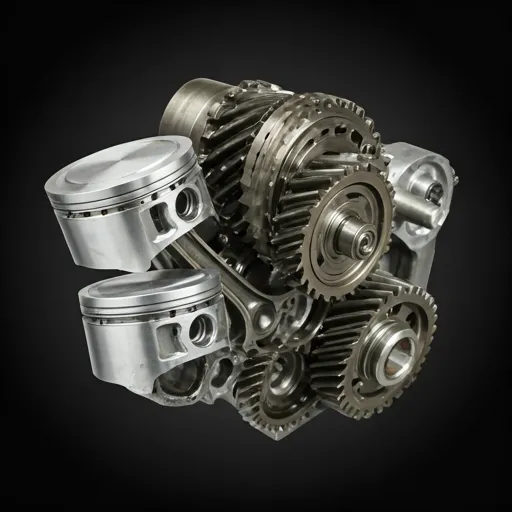
Automotive selection factors
Match the Polymer to the Component Duty
Review the full combination of thermal, mechanical, electrical and chemical demands before confirming the material and grade.
Temperature
Confirm continuous and peak temperatures, nearby heat sources and thermal cycling around motors, batteries and powertrain systems.
Wear and Friction
Evaluate speed, pressure, mating surface, lubrication and expected service life for bearings, guides, bushings and sliding parts.
Electrical Duty
Specify voltage, insulation thickness, creepage, environmental exposure and any grade-specific flame or compliance requirements.
Chemical Exposure
Identify fuels, oils, coolants, cleaners and concentrations, together with contact time and operating temperature.
Load and Creep
Define static and dynamic loads, fastening forces, vibration and long-term dimensional requirements.
Manufacturing Route
Match rod, sheet or tube dimensions to the finished geometry, machining allowance, quantity and material utilization.
Automotive applications
Engineering Plastics Across Vehicle and Production Systems
Typical components range from electrical supports and powertrain wear parts to fluid-system components and assembly-line tooling.
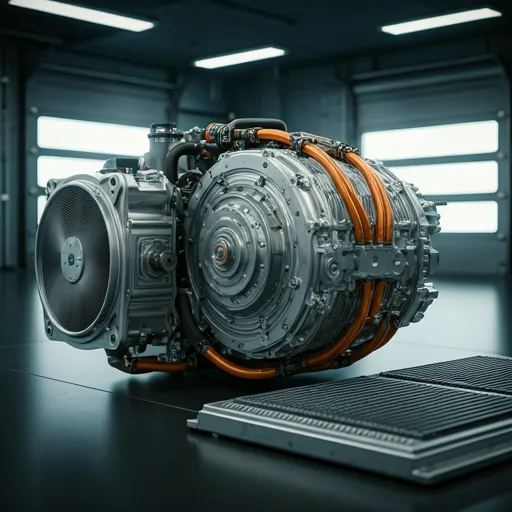
EV Electrical Systems
Insulating supports, connector parts, sensor components, spacers and structures around electric-drive systems.
Powertrain and Transmission
Bushings, thrust washers, guides, wear rings, seals and dimensionally controlled mechanical parts.
Sensors and Electronics
Sensor housings, coil supports, connector components, insulating plates and small precision electrical parts.
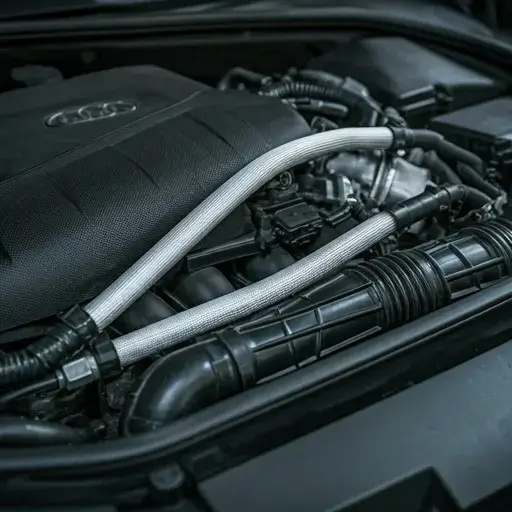
Fluid and Thermal Systems
Valve parts, pump components, connectors, manifolds, sleeves and supports exposed to automotive fluids and heat.
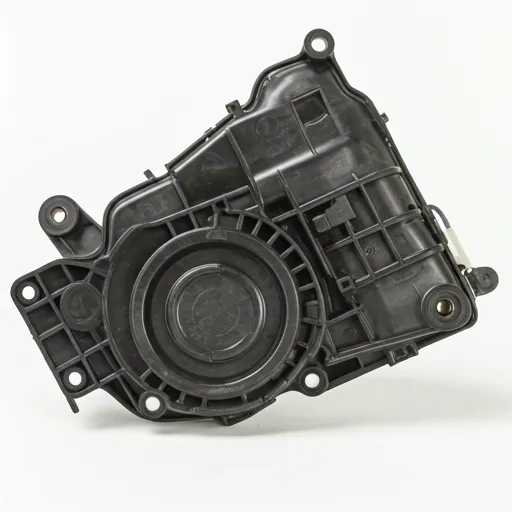
Interior and Mechanisms
Gears, clips, guides, rollers, latches, spacers and other low-friction or dimensionally stable mechanism parts.
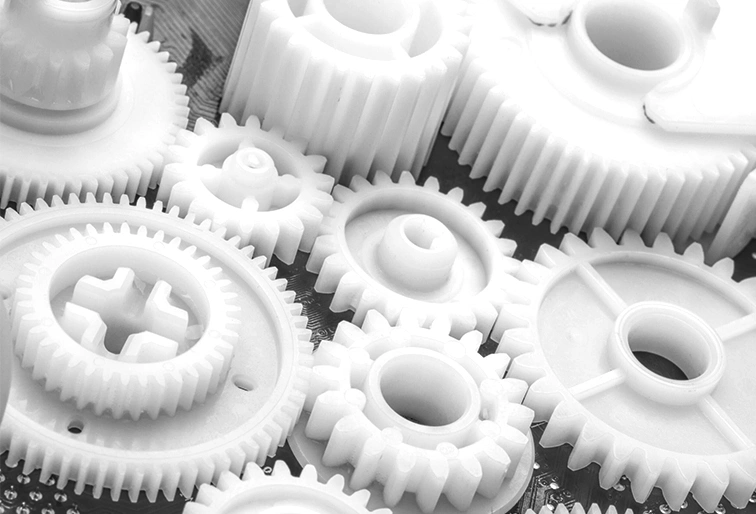
Production and Assembly
Fixtures, wear strips, positioning blocks, rollers and handling components used in manufacturing and assembly equipment.
Recommended materials
Common Engineering Plastics for Automotive Components
These materials cover different combinations of heat, wear, chemical exposure, insulation and cost. Confirm the exact grade against the application and required documents.
PEEK
Consider for demanding combinations of temperature, mechanical load, wear and chemical exposure.
- Powertrain wear parts
- Seals and bushings
- Electrical components
PPS
A candidate for heat-exposed, chemically demanding and electrically insulating automotive components.
- Sensor and connector parts
- Pump and fluid components
- Electrical supports
PEI
Consider where dimensional stability and electrical insulation are important alongside elevated-temperature service.
- Electrical housings
- Sensor components
- Insulating structures
POM
Commonly evaluated for low-friction, wear-sensitive and precisely machined moving components.
- Gears and rollers
- Clips and guides
- Bushings and spacers
PA
A practical option for tough mechanical parts, wear components and production-equipment applications.
- Rollers and pulleys
- Wear pads
- Assembly fixtures
PTFE
Consider for very low friction, sealing duties and broad chemical exposure where stiffness and creep are addressed by the design.
- Sealing components
- Valve seats
- Low-friction liners
Quick selection guide
Start the Comparison with Component Requirements
This is a practical starting point, not a substitute for grade-specific TDS review or validation in the final component.
| Material | Common selection focus | Typical component examples | Important checks |
|---|---|---|---|
| PEEK | Combined heat, load, wear and chemical demands | Bushings, seals, wear parts and electrical components | Grade, temperature, load, mating surface and documents |
| PPS | Heat, chemical exposure and electrical insulation | Connectors, sensor parts, pump and fluid components | Grade, reinforcement, toughness and chemical medium |
| PEI | Electrical insulation and dimensional control | Housings, supports and insulating structures | Temperature, impact, chemicals and compliance needs |
| POM | Low friction, wear and precision moving parts | Gears, guides, clips, rollers and bushings | Temperature, moisture, chemicals and long-term load |
| PA | Tough mechanical parts and economical wear components | Rollers, pulleys, wear pads and fixtures | Moisture, dimensions, load, grade and conditioning |
| PTFE | Low friction, sealing and chemical exposure | Valve seats, seals, liners and sliding components | Creep, load, dimensions, fillers and mating surface |
Supply process
From Application Brief to Material or Part Quotation
Share Requirements
Send the drawing, dimensions, quantity, tolerance, operating conditions and requested documentation.
Confirm Material and Form
Compare candidate materials and select rod, sheet or tube based on the geometry and machining allowance.
Review Supply Scope
Confirm whether the request is for stock shapes, cut blanks or drawing-based finished components.
Quotation and Documentation
Availability, price, lead time and grade-specific documents are confirmed before order placement.
Automotive FAQ
Questions Before Material Selection
Provide the actual service conditions so the candidate material and supply form can be reviewed more accurately.
Which plastic should I use for a heat-exposed automotive part?
Can engineering plastics replace metal components?
What should be checked for electric-vehicle insulation parts?
Do you supply machined automotive plastic parts?
What information is needed for a quotation?
Discuss an Automotive Material or Component
Send your drawing, dimensions and operating conditions for a stock shape, cut blank or drawing-based component quotation.