
Semi-crystalline engineering thermoplastic
PETP Rods, Sheets, Tubes and Machined Components
Polyethylene terephthalate stock for high stiffness, low moisture uptake, wear performance and dimensional control in precision mechanical, electrical and processing components.
- Natural engineering stock
- High stiffness and strength
- Low moisture uptake
- Rod, sheet, tube and machining
Selection note: Standard PETP is not a universal high-temperature or hot-water material. Confirm the exact grade, dimensions, fluid exposure, processing route and required documentation during quotation.
What is PETP?
A Semi-Crystalline Engineering Plastic for Stable, Wear-Resistant Parts
PETP is the common engineering-plastics designation for polyethylene terephthalate. Its semi-crystalline structure gives stock shapes a useful balance of stiffness, tensile strength, dimensional control and machinability.
PETP is considered for guides, wear components, rollers, electrical parts, fixtures and food-processing equipment where low moisture uptake and controlled friction are important. The exact grade, color, crystallinity and manufacturing route can change the result.
Standard PETP should not be treated as a universal hot-water or high-temperature replacement. Confirm the real temperature, fluid, load, tolerance and required documents against the supplied grade TDS before production release.
High stiffness
PETP is selected for rigid, dimensionally controlled components that need more stiffness than many general-purpose plastics.
Low moisture uptake
Lower moisture absorption can support more stable dimensions than moisture-sensitive engineering plastics in suitable environments.
Sliding and wear
The material family is used for guides, bushings and wear parts; friction, mating material, pressure and speed must be evaluated as one system.
Machinable stock
Rod, sheet / plate and tube allow the stock form to be matched to turned, flat or annular finished geometries.
Grade-family selection
Select the PETP Formulation Before Comparing Properties
Unfilled, reinforced, wear-focused and recycled or contact-specific PETP grades solve different problems. Values from one formulation must not be transferred to another without the applicable TDS.
Unfilled PETP
The baseline PETP option for rigid, dimensionally controlled and machinable parts where the required wear and chemical balance can be met by the base resin.
- Guides, rollers and precision fixtures
- Electrical and mechanical components
- Confirm natural color and stock condition
Glass-Fiber-Reinforced PETP
Glass reinforcement can increase stiffness and reduce thermal expansion, but it can also change impact behaviour, surface finish, anisotropy and machining requirements.
- Supports and structural fixtures
- Load-bearing mechanical parts
- Confirm fibre content and direction effects
Wear-Modified PETP
Lubricant or other fillers may adjust friction and wear response for guides, bearings or sliding parts. Mating surface, pressure, speed, temperature and contamination still require validation.
- Bushings, wear pads and guide elements
- Evaluate the complete sliding system
- Confirm filler formulation before sourcing
Recycled or Contact-Specific PETP
Recycled-content, food-contact, electrical or flame-retardant formulations require their own declarations and test documents. Approval cannot be inferred from the PETP family name or color.
- Define the destination market and contact medium
- Request the supplied grade certificate or statement
PETP supply forms
Choose Stock Around the Finished Geometry
Rod, sheet / plate and tube are the primary starting forms for machining and fabrication. Confirm the grade, color, dimensions, allowance, quantity and current stock status during quotation.
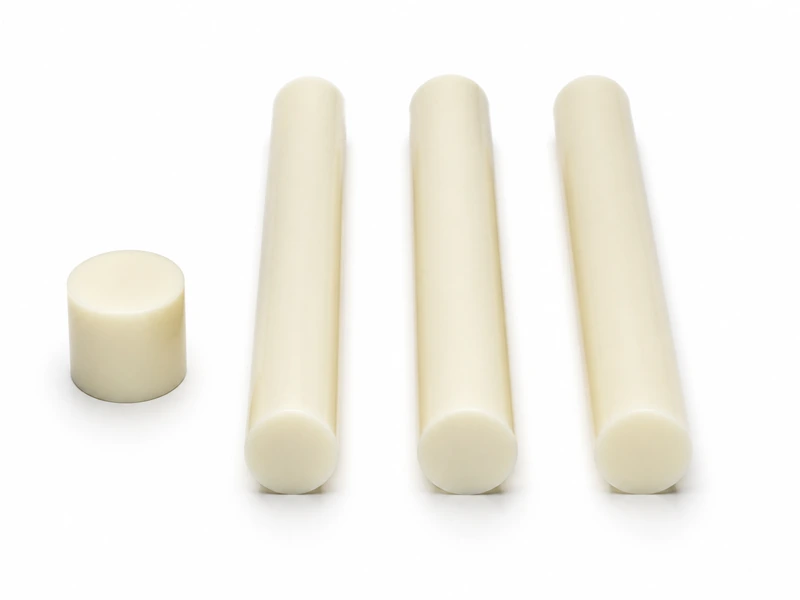
PETP Rod
Starting stock for rollers, guide wheels, bushings, spacers, pulleys, wear rings and other turned components requiring stiffness and controlled dimensions.
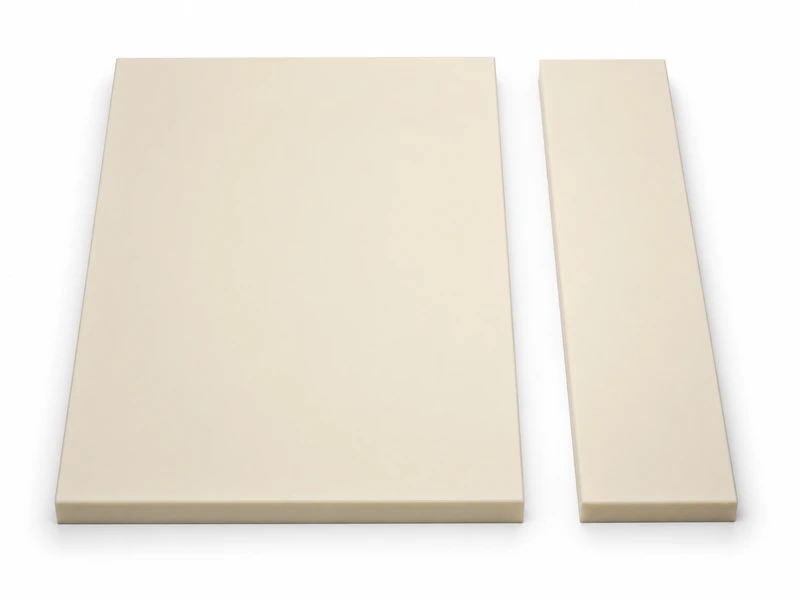
PETP Sheet and Plate
Flat stock for wear pads, fixtures, guide plates, electrical supports, covers and precision components where low moisture uptake helps dimensional control.
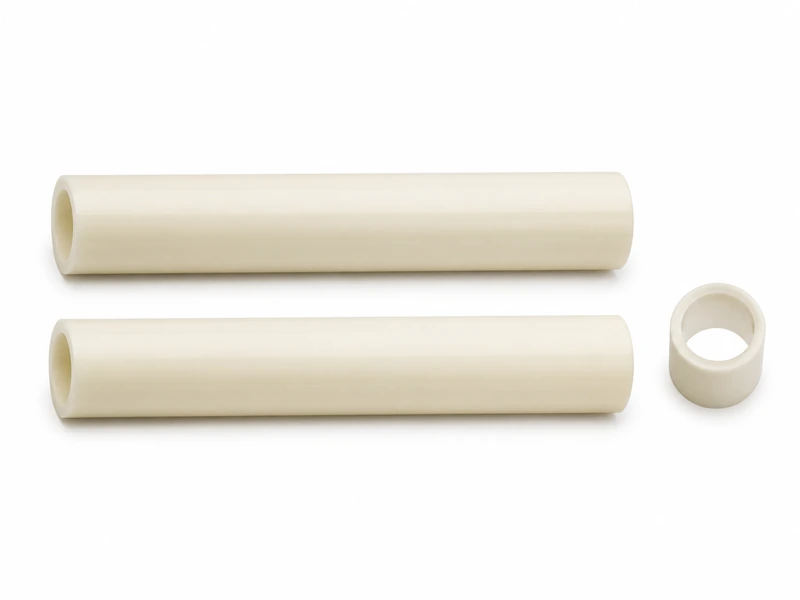
PETP Tube
Hollow stock can reduce material removal for sleeves, bushings, rollers, rings and other annular geometries. Check pressure, fluid and temperature limits before use.
Machined PETP Components
Send the drawing, tolerances, inspection requirements and service conditions. Crystallinity, stress relief, machining sequence and final inspection can affect dimensions and wear performance.

Technical selection checklist
Verify These Items Against the Exact PETP Grade TDS
PETP stock is often selected for moderate-temperature, dimensionally controlled parts. Confirm the real load, speed, fluid, temperature and documentation instead of relying on one headline property.
| Selection topic | What to confirm | Why it matters | Quotation input |
|---|---|---|---|
| Temperature and hot water | Continuous, peak and cycling temperature; hot-water or steam exposure | Standard PETP grades may have limited hot-water capability and temperature margin | Temperature profile, fluid, pressure and exposure duration |
| Mechanical load and creep | Tension, compression, bending, impact and sustained load | Stiffness and dimensional retention depend on stress, time and temperature | Load direction, magnitude, safety factor and service life |
| Sliding and wear | Mating material, pressure, speed, lubrication, surface finish and debris | Friction and wear are system results, not universal PETP constants | PV condition, counterface, duty cycle and inspection limit |
| Chemical exposure | Medium, concentration, temperature, cleaning agent and duration | Compatibility can change with temperature, stress, color and formulation | Full chemical list and cleaning process |
| Moisture and dimensions | Humidity, conditioning, tolerance, flatness and inspection state | Moisture uptake, crystallinity and machining history influence final dimensions | Drawing, tolerance, datum and inspection environment |
| Appearance and color | Natural opaque appearance, color, surface finish and wall thickness | Stock appearance varies with grade, filler, process and section thickness | Reference sample, dimensions and acceptance standard |
| Contact and documentation | Food-contact, electrical, flame, recycled-content or traceability documents | Declarations apply only to the supplied grade, color, form and production lot | Destination market, certificate, report and lot information |
PETP applications
Applications That Need Stiffness, Wear Control and Dimensional Stability
These are application starting points for PETP stock, not automatic approvals or certification claims. Confirm the exact formulation, process, temperature and documents for each finished component.
Mechanical engineering and automation
Guides, rollers, spacers, fixtures, housings and precision parts where high stiffness, machinability and controlled dimensions are more important than high-temperature service.
Conveyor and sliding components
Wear pads, guide rails, bushings, rollers and chain components can use PETP when the counterface, pressure, speed, lubrication and contamination conditions are validated together.
Electronics and electrical equipment
Insulating supports, connector parts, test fixtures and precision carriers where low moisture uptake and dimensional control help maintain alignment and assembly tolerances.
Food and beverage processing
Scrapers, guide parts, wear components and fixtures may be considered for processing equipment when the fluid, cleaning cycle, temperature and required food-contact declaration are confirmed for the supplied grade.
Automotive and vehicle construction
Bushings, guide elements, brackets, insulating parts and interior mechanisms where stiffness, wear and dimensional stability fit the vehicle duty cycle and temperature range.
Packaging and fiber feedstocks
Bottle, film and fiber applications require process-specific PET resin, orientation, drying and compliance data. Do not transfer packaging-grade claims to PETP semi-finished stock shapes.
PETP, POM, PA, PEEK or PPSU?
Choose the Material That Matches the Dominant Requirement
No engineering polymer is universally better. Compare the exact grades at the operating temperature, load, speed, fluid, geometry and documentation requirement.
Stiffness, low moisture uptake, wear control and machinable stock are the dominant requirements at a moderate service temperature.
Low friction, efficient machining and a cost-sensitive design are more important than PETP’s stiffness and dimensional profile.
Higher toughness or impact absorption is needed and the design can accommodate moisture-related changes in dimensions and properties.
Higher temperature capability, chemical resistance or wear-focused performance is required beyond the selected PETP grade’s range.
Impact toughness, hot-water or repeated steam exposure is the primary requirement and the selected PPSU grade provides the necessary documents.
Compare test method, temperature, pressure, speed, moisture, chemicals, counterface, crystallinity, processing history and required documents before selecting the stock material.
Quotation workflow
Confirm the Grade, Stock Form and Service Requirement
Share the application conditions
Provide temperature, load, speed, chemical exposure, moisture, dimensions and expected service life.
Confirm the PETP grade scope
Identify the required formulation, color, stock condition and any contact, electrical, flame or traceability documents. Use the applicable grade TDS for the final decision.
Match the stock form and size
Choose rod, sheet / plate or tube based on finished geometry, machining allowance, material utilization and quantity.
Confirm stock and delivery details
Confirm dimensions, quantity, packaging, current stock, TDS or other requested documents and the expected delivery arrangement before placing the order.
PETP FAQ
Questions Before Ordering PETP Stock
The exact grade, stock form, dimensions, service conditions and documentation are as important as the PETP polymer family.
What is PETP material?
Which PETP stock shapes are available?
Is PETP suitable for hot water or continuous high temperature?
When should I choose PETP instead of POM or PA?
Can PETP be used for food-contact components?
Can PETP rods, sheets or tubes be machined?
What information is needed for a PETP quotation?
More Polymer Material…
LOOKING FOR MORE?
Explore material possibilities for your engineering projects based on your specific operating temperatures.
Ultra-High
Unmatched thermal and chemical durability in the most demanding conditions.
Advanced
Superior mechanical properties optimized for heavy industrial engineering.
Fluoropolymer
The absolute pinnacle of thermal and chemical resistance for critical environments.
Discuss Your Polymer Solution Needs
Ready for your next project? Complete the form to consult with our technical team.