
Amorphous high-performance thermoplastic

PEI Rods, Sheets and Tubes

Unfilled polyetherimide stock shapes for demanding combinations of temperature resistance, dimensional stability, electrical performance and natural amber transparency.

What is PEI?

An Amorphous High-Performance Polymer for Stable, Demanding Parts

Polyetherimide (PEI) is an amorphous high-performance thermoplastic selected when a component needs a balance of elevated-temperature capability, dimensional stability, electrical performance and a natural amber appearance.

The current JEKIN page covers unfilled PEI stock only. The supplied forms are rods, sheets / plates and tubes, allowing customers to select stock around the finished geometry and their own machining or fabrication route.

Processing history, stock condition, geometry and the exact resin grade can change final dimensions and performance. Use the applicable grade TDS and validate the finished part before production release.

01

Thermal capability

PEI is considered for components that must retain useful performance at temperatures beyond many general-purpose plastics.

02

Dimensional stability

Low creep, controlled expansion and the material condition all matter when maintaining tolerances over time.

03

Electrical performance

PEI is commonly evaluated for insulating components, connectors and housings where dielectric behavior and precision are required.

04

Amber stock shapes

Natural amber PEI stock is available here as rod, sheet / plate and tube; confirm the actual color and size during quotation.

Grade scope

Start with the Exact PEI Material Condition

JEKIN currently presents unfilled PEI stock. Do not transfer values from a reinforced, filled or specialty grade to the pure material without checking the applicable technical datasheet.

Current supply

Unfilled PEI

The pure PEI option shown on this page, supplied as natural amber stock shapes for customers who need a stable, high-temperature engineering thermoplastic.

  • Rods, sheets / plates and tubes
  • Electrical, precision and structural uses
  • Confirm the exact grade TDS before design release
Scope boundary

Reinforced PEI

Glass-fiber, carbon-fiber and other modified PEI families are not included in the current supply scope. Their stiffness, expansion, electrical behavior and color can differ from unfilled PEI.

  • Not listed as current stock on this page
  • Request confirmation if a modified grade is required
Wear-focused materials

Filled or Bearing PEI

Wear-focused formulations are also outside the current pure-PEI scope. Friction, wear and mating-surface results must be evaluated as a complete tribological system.

  • Not currently offered as the standard PEI option
  • Confirm formulation and test requirements before sourcing
Quotation checkpoint

Match the Grade to the Requirement

Share the service temperature, load, electrical duty, chemical exposure, dimensions, color expectation and documentation needs so the supplied material condition can be confirmed.

  • Use the exact grade TDS for numeric design values
  • Confirm current stock and inspection documents

PEI supply forms

Select Stock Around the Finished Geometry

JEKIN currently shows unfilled PEI rods, sheets / plates and tubes. Confirm the exact dimensions, color, material condition, quantity and current stock status during quotation.
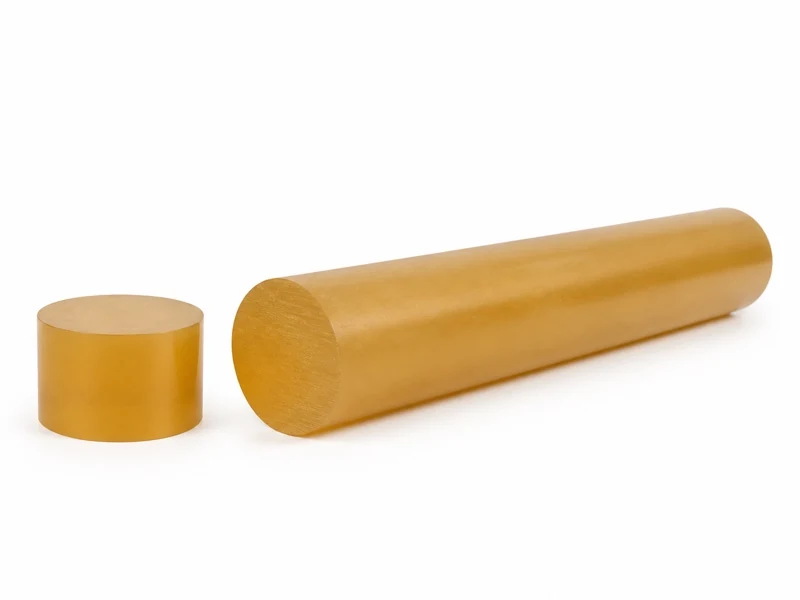
Natural amber unfilled PEI polyetherimide rod stock on a white background
Round stock

PEI Rod

Round stock for turned geometries, bushings, rings, fasteners, insulating parts and other cylindrical components made to the customer's design.
Confirm diameter, length, grade, color, quantity and current stock.
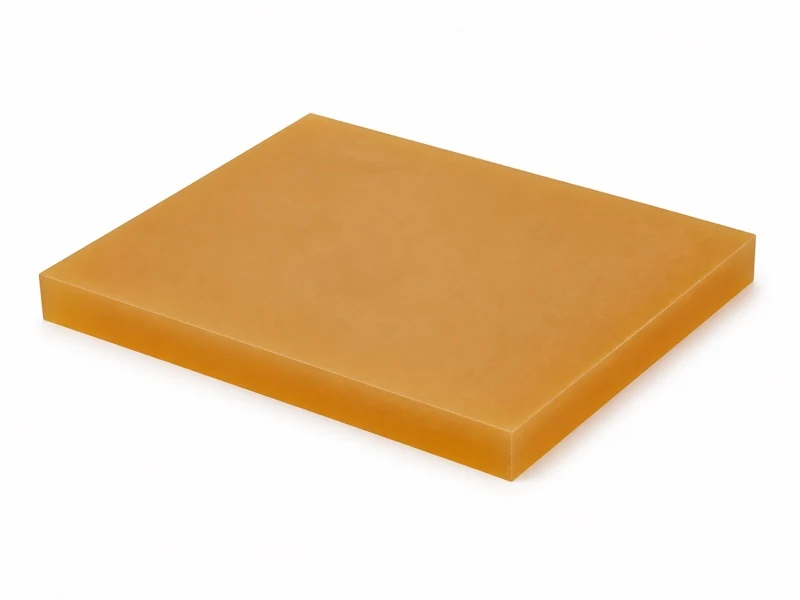
Natural amber unfilled PEI polyetherimide sheet and plate stock on a white background
Flat stock

PEI Sheet and Plate

Flat stock for fixtures, electrical components, covers, wear pads, structural plates and other precision parts requiring a stable high-performance thermoplastic base.
Confirm thickness, width, length, flatness, color, quantity and current stock.
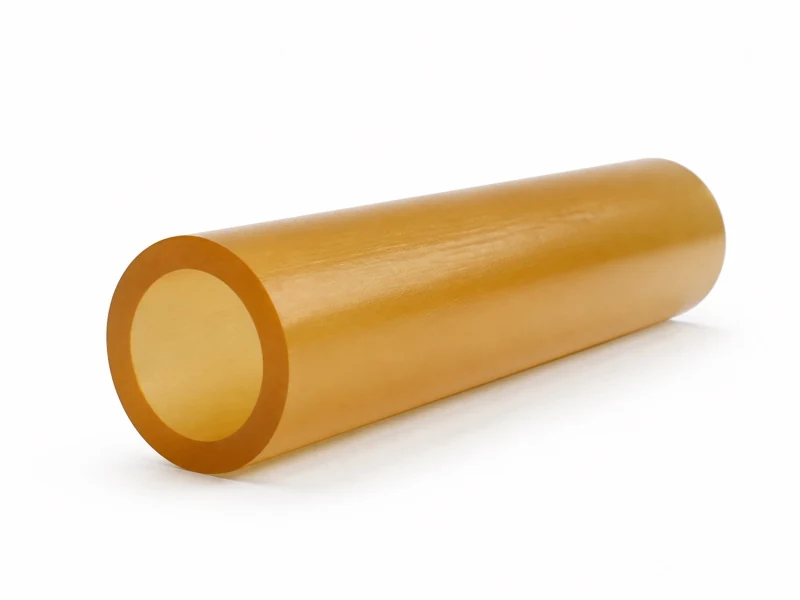
Natural amber unfilled PEI polyetherimide tube stock on a white background
Hollow stock

PEI Tube

Hollow stock can reduce material removal for sleeves, rings, bushings, bearing-related parts, electrical isolators and other annular geometries.

Confirm outside diameter, inside diameter, wall, length, color, quantity and current stock.

Technical selection checklist

Verify These Items Against the Exact PEI Grade TDS

A generic PEI property table is not sufficient for design. Confirm the test method, specimen condition, temperature and supplied material condition as well as the headline value.

Selection topic What to confirm Why it matters Quotation input
Temperature Continuous, peak and cycling temperature under load Usable limits depend on stress, time and the exact grade Temperature profile and exposure duration
Mechanical load Tension, compression, bending, impact and sustained load Creep and dimensional retention depend on load and time Load direction, magnitude, safety factor and service life
Electrical duty Voltage, frequency, insulation path, temperature and humidity Dielectric behavior must be checked at the real operating condition Voltage, clearance, environment and test requirement
Chemical and cleaning Medium, concentration, temperature, cleaning agent and duration Broad compatibility statements can hide grade-specific limits Full chemical list and cleaning process
Moisture and dimensions Humidity, conditioning, tolerance, flatness and inspection state Moisture and processing history can affect final dimensions Drawing, tolerance, datum and inspection environment
Appearance and color Natural amber appearance, transparency expectation and surface finish Color and finish can vary with thickness, process and material condition Reference sample, dimensions and acceptance standard
Documentation Grade identity, traceability and required test documents Documents apply to the supplied grade and production lot Required report, certificate and lot information
Reference note: published PEI values vary by grade, material condition, test method and temperature. Do not use one headline value as a universal component limit without the applicable grade TDS and finished-part validation.

PEI applications

Applications That Need Stability, Insulation and Controlled Performance

These are application starting points for unfilled PEI stock, not automatic grade approvals or certification claims. Confirm the exact material, process and documentation for each finished component.

Aerospace interiors and electrical parts

Housings, brackets, insulation components and precision fixtures where dimensional control, low mass and thermal performance must be balanced with the design environment.

Semiconductor and electronics

Test fixtures, insulating structures, connector components and handling parts after purity, electrical, thermal and outgassing requirements have been confirmed.

Medical equipment components

Equipment housings, instrument components and precision supports where dimensional stability and cleaning or sterilization duty are validated for the finished design. No medical certification is implied by this application example.

Automotive and precision equipment

Sensor housings, electrical insulators, guides, fixtures and structural parts exposed to heat, vibration and dimensional requirements.

Food and process equipment

Precision components and insulating parts used around process equipment after the contact medium, cleaning cycle and required compliance documents have been separately confirmed.

PEI, PEEK, PAI or PPS?

Choose the Material That Matches the Dominant Requirement

No engineering polymer is universally better. Compare exact grades at the operating temperature, load, environment and finished-part condition.

Choose PEI when

An amorphous engineering thermoplastic with electrical performance, dimensional control and a natural amber appearance fits the service requirement.

Consider PEEK when

Higher temperature capability, broad chemical resistance, toughness or wear-focused stock is the primary design driver.

Consider PAI when

High-temperature stiffness, creep control or specialized sliding performance is more important than the PEI material profile.

Consider PPS when

The required chemical and thermal performance can be met by a more cost-sensitive material system and the design does not need PEI's combination of properties.

Validate

Compare test method, temperature, load, moisture, chemicals, electrical duty, geometry, processing history and required documents before selecting the stock material.

Natural amber unfilled PEI rod stock prepared for quotation review

Quotation workflow

Confirm the Grade, Stock Form and Delivery Requirement

Share the application conditions

Provide temperature, load, electrical duty, chemical exposure, moisture, dimensions and expected service life.

Confirm unfilled PEI

Confirm that pure / unfilled PEI is suitable for the design and request the applicable grade TDS and available color information.

Match the stock form and size

Choose rod, sheet / plate or tube based on finished geometry, allowance, material utilization and quantity.

Confirm stock and documents

Confirm dimensions, quantity, packaging, current stock, requested traceability and the expected delivery arrangement before placing the order.

PEI FAQ

Questions Before Ordering PEI Stock

The exact grade, stock form, dimensions and documentation are as important as the PEI polymer family.

Which PEI material is currently supplied?
The current page covers pure / unfilled PEI only. Reinforced, filled, bearing and wear-focused PEI grades are not included in the current standard supply scope.
Which PEI stock shapes are available?
The current stock-shape range covers rods, sheets / plates and tubes. Confirm the exact outside dimensions, length, wall or thickness, color and current stock during quotation.
Do you currently supply machined PEI components?
No. This page is focused on PEI semi-finished stock shapes. You may send the finished geometry for material and stock-size discussion, but machined-component supply is not included here at present.
What color should I expect for natural PEI stock?
The product images show a natural amber appearance. Actual color and transparency can vary with thickness, grade, process and viewing condition, so confirm the required appearance with a reference or sample before production.
Can PEI be used for medical or aerospace parts?
PEI is considered in medical equipment, aerospace, electronics and other demanding applications. Application examples do not imply a certification; confirm the exact grade, compliance documents, processing route and finished-part validation for the intended use.
What information is needed for a PEI quotation?
Provide the required stock form, dimensions, quantity, color expectation, service temperature, load, electrical or chemical conditions, delivery requirement and requested documentation. Current stock and lead time are confirmed during quotation.

More Polymer Material…

LOOKING FOR MORE?

Explore material possibilities for your engineering projects based on your specific operating temperatures.

Ultra-High

Unmatched thermal and chemical durability in the most demanding conditions.

Advanced

Superior mechanical properties optimized for heavy industrial engineering.

Fluoropolymer

The absolute pinnacle of thermal and chemical resistance for critical environments.

Standard

Versatile performance and high economy for standard industrial applications.

Discuss Your Polymer Solution Needs

Ready for your next project? Complete the form to consult with our technical team. 

Official logo of Jekin Polymer - A leading provider of high-performance engineering plastics and polymer solutions

WE ARE HERE TO HELP YOU

Discuss Your Polymer Solution Needs

Are you looking for top-quality polymer solutions tailored to your needs?

Reach out to us.

Form / Shape
Please include dimensions, quantity, drawing availability, operating temperature, chemical exposure or application details.